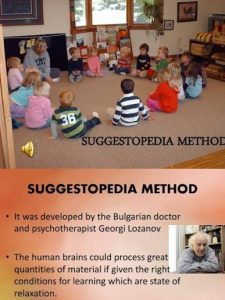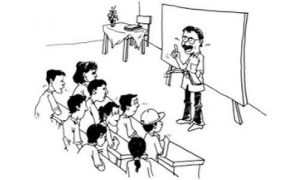
English learning in Indonesian secondary schools faces complex challenges that include low student motivation, high language anxiety, and limited opportunities for communicative practice outside the classroom. The traditional approach that is still dominant in many schools tends to emphasize mastery of grammatical structure and vocabulary memorization, so students’ communicative abilities are often left behind. Two methods that offer promising alternatives are Suggestopedia and Communicative Language Teaching (CLT). Suggestopedia, developed by Georgi Lozanov, focuses on creating an atmosphere of relaxation and positive suggestion to lower affective barriers, while CLT emphasizes the real use of language for communication purposes. The integration or parallel application of these two methods in Indonesian secondary schools is relevant because they complement each other: Suggestopedia provides a supportive psychological condition, while CLT provides an authentic communicative practice framework. Analysis of the potential for collaboration between these two approaches is important to formulate a more effective learning strategy that is in accordance with the characteristics of adolescent students in Indonesia. Theoretically, Suggestopedia and CLT have different but supportive foundations. Suggestopedia is based on the principle that human learning capacity can be significantly increased if fear and tension are minimized through music, relaxation, and positive suggestions from teachers. This method utilizes a state of relaxation to facilitate the absorption of language inputs into long-term memory. On the contrary, CLT is born from the view that language is essentially a communication tool, so learning must be oriented towards meaning, interaction, and fluency rather than just formal precision. CLT principles include the use of communicative tasks, the role of teachers as facilitators, and an emphasis on authentic materials. When the two are combined, Suggestopedia can lower the affective filter as described by Krashen, so that students are better prepared and courageous to engage in the communicative activities that are at the core of CLT. This synergy is very much in line with the needs of high school students who are in the stage of emotional development that is sensitive to social judgment.
The application of the combination of Suggestopedia and CLT in Indonesian secondary schools can be systematically designed in several stages. At the beginning of learning, teachers can utilize Suggestopedia elements such as playing relaxation music (both baroque and traditional music), giving positive suggestions, and presenting material through dramatic dialogue in a comfortable atmosphere. Once the relaxation condition is achieved, the activity moves to the CLT framework in the form of role-play, group discussions, information-gap activities, or simple communication projects relevant to students’ lives. Listening or reading materials can be presented first in Suggestopedia format to reduce anxiety, then continue with communicative tasks that demand free language production. In classrooms with large student numbers, teachers can divide activities into short relaxation classical sessions followed by small group work. This hybrid approach allows students to not only understand the forms of language, but also to use them meaningfully in real interactions, while maintaining positive emotional engagement throughout the learning process.
The advantage of integrating the two methods lies in their ability to overcome two major problems of English learning in secondary school: psychological barriers and lack of communicative practices. Suggestopedia helps students feel more secure and confident, while CLT ensures that the confidence is directed towards the use of functional language. The expected results include improved speaking fluency, the ability to understand oral and written discourse contextually, and higher learning motivation. However, its implementation is not without challenges. Curriculum time constraints, administrative burden on teachers, large class sizes, and lack of training on both methods are real obstacles. In addition, national exam orientation or assessments that still emphasize formal linguistic aspects can reduce space for freer communicative activities. Therefore, contextual adaptation, principal support, and teacher professional development are important prerequisites for the synergy between Suggestopedia and CLT to run effectively.
Overall, the Suggestopedia and Communicative Language Teaching methods have great potential to complement each other in English language learning in Indonesian secondary schools. Suggestopedia creates affective conditions that support the reception of input, while CLT provides an authentic and meaningful communicative practice space. The combination of the two can result in more holistic learning, reduce anxiety, while improving students’ communicative competence. Although it requires adjustments to local limitations, this hybrid approach is worth considering as an alternative to teaching practices that are still dominated by traditional methods. Further empirical research in various types of secondary schools in Indonesia is urgently needed to measure their impact quantitatively and qualitatively. Thus, the integration of Suggestopedia and CLT is expected to contribute to efforts to improve the quality of English language learning that is more humane, effective, and relevant to the needs of the 21st century.
#suggestopedia
#georgilozanov
#ikafarihahhentihu