Language Between Generations: Why Young People Create New Languages?

Language is one of the most dynamic elements of culture and continues to evolve with the changing times. In the context of intergenerational relationships, differences in the use of language are often a point of tension as well as a bridge of understanding. The younger generation, particularly Gen Z and Alpha, are actively creating new language variants that are different from the formal languages used by previous generations. This phenomenon is not just a temporary trend, but rather a natural response to the social, technological, and identity environment they face. This process of creating a new language reflects the need for humans to mark their own social space, while also affirming their existence amid the dominance of narratives of older generations. Sociological linguistics sees this as a form of linguistic innovation born from the increasingly integrated interaction of digital and offline communities.

One of the main reasons young people are creating new languages is the need for identity and differentiation. Adolescents and young people often feel pressured by the norms and values inherited from previous generations. By creating new slang, acronyms, or even grammars, they build an exclusive “code” that only fellow age groups understand. In Indonesia, an example is clearly seen in the use of words such as “gas”, “bucin”, “cringe”, “sigma”, to phrases such as “me time” or “healing” which are modified according to the local context. This phenomenon is similar to the speech community theory put forward by Dell Hymes, in which language serves as a marker of group boundaries. In addition, the influence of social media accelerated the spread and evolution of this language. Platforms such as TikTok, Instagram, and Twitter (X) become linguistic laboratories where new words can go viral in just a matter of hours, thus strengthening a sense of belonging and togetherness among young people.

Technological factors and social change also play an important role. The younger generation grew up in the digital age where communication is fast, visual, and efficient. Characters limited to Instagram tweets or captions force them to create concise but concise forms of language, such as the use of emojis, abbreviations, or memes as units of communication. In addition, contemporary issues such as mental health, climate change, and gender identity are driving the emergence of new vocabulary that is more sensitive and inclusive. From a psycholinguistic perspective, the creation of language is also a form of high cognitive creativity. Young people are not only adopting, but also modifying the standard language to fit the fast-paced and fluid realities of their lives. This is also a coping mechanism against generational pressure, where the old language is considered rigid and less representative of their experience.

However, language innovation by the younger generation often draws criticism from the older generation who consider it a degradation of language. In fact, history has shown that language is always changing. Modern Indonesian itself was born from various Malay, Javanese, Sanskrit, Arabic, Dutch, and English influences. What is happening now is simply a continuation of the same process, only at a higher speed thanks to technology. Contemporary linguistic research shows that interlinguistic and intercultural contact enriches the treasures of language, not destroys it. The younger generation that created the new language is actually making evolutionary adaptations, ensuring that the language remains relevant to the needs of the times. If left without dialogue, the linguistic gap between generations can actually weaken social cohesion and the transmission of knowledge between generations.

Ultimately, intergenerational language should be viewed as an opportunity rather than a threat. Language education in schools and colleges needs to be more adaptive, integrating an understanding of contemporary language dynamics without abandoning the foundations of the standard language. Parents and educators can learn the language of young people to strengthen communication, while young people are taught to appreciate the richness of heritage languages. The phenomenon of the creation of new languages by the younger generation confirms that language is not a dead artifact, but a living thing that breathes according to the rhythm of its times. With mutual respect and openness, intergenerational language differences can be a force that unites, not separates. This is where the beauty of language lies as a mirror of a society that continues to develop.

#newlanguage

#language

#ikafarihahhentihu

Language Between Generations: Why Young People Create New Languages?

Language has always been a reflection of the social and cultural dynamics of a generation. Language differences between generations are not a new phenomenon, but they are accelerating in the digital age. Generation Z and Alpha often create new slang or terms that confuse the previous generation, such as “rizz”, “skibidi”, “bucin”, “mager”, or “delulu”. This phenomenon reflects the natural process of language innovation in linguistics, in which young people use language to mark identity, build group solidarity, and differentiate themselves from parents or authorities. According to various linguistic studies, slang serves as a linguistic shibboleth—a test of group membership—that allows young people to express their unique experiences amid social, technological, and future pressures. This process is not just an aberration, but a mechanism for language adaptation to the new reality faced by the younger generation.

The main reason young people are creating new languages is the need for identity and subtle rebellion against existing norms. Psychologists and linguists explain that slang provides a flexible, low-risk way to assert autonomy, test social roles, and build a sense of belonging. Amid the dominance of social media like TikTok and Instagram, language is changing at an incredible pace through viral mechanisms, memes, and algorithms. The terms often come from African American Vernacular English (AAVE), pop culture, or were created spontaneously for the efficiency of digital communication—abbreviations, portmanteaus, and puns that allow for the rapid expression of emotion, sarcasm, or irony. In Indonesia, examples such as “gabut” (blind salary), “mager” (lazy movement), “sabi” (can), and “bucin” (love slave) show local creativity that combines Indonesian with global influence. The younger generation uses this language to mark “contemporary”, build intimacy between friends, and reject formalities that parents consider rigid.

The development of technology and social media is the main catalyst for this acceleration of language change. Unlike the pre-internet era where slang spread slowly through face-to-face interactions, now a single word can go global in a matter of hours. Digital platforms facilitate real-time co-creation, where online communities come together to remix, modify, and disseminate new terms. This resulted in unprecedented linguistic variations, including code-mixing between English and local, the use of emojis as word substitutions, and rapid shifts in meaning. Studies show that Gen Z uses slang not only for fun or efficiency, but also to critique social realities—such as terms that reflect climate anxiety, mental health, or distrust of institutions. However, this innovation also creates a generational gap called the generational language gap, where parents feel “alienated” from their own children’s language. On the other hand, this process enriches the overall treasure of the language.

Ultimately, the creation of new languages by young people is an integral part of the dynamic evolution of human language. Rather than being seen as a threat to standard languages, this phenomenon should be understood as a form of linguistic creativity that reflects adaptation to a rapidly changing world. Smart educational approaches—such as digital literacy and register comprehension (the use of language in context)—can bridge the gap without stifling innovation. In the future, with the advancement of AI and new communication platforms, future generations are likely to continue to create increasingly fluid and contextual languages. Language is not a static entity, but a living being that breathes with its users. By understanding why young people continue to create new languages, we not only value generational diversity but also prepare a more inclusive society for the inevitable linguistic changes. Through this perspective, language differences between generations can be a bridge of understanding rather than just a source of conflict.

#language

#betweengeneration

#ikahentihu

Man-Made Languages: Esperanto, Klingon, and Dothraki

Constructed languages (conlangs) are linguistic phenomena that attract the attention of experts because they show the ability of humans to design communication systems consciously and systematically. Unlike natural languages that have evolved organically over the centuries, artificial languages were created with specific goals, whether to facilitate international communication, artistic purposes, or entertainment. Three of the most iconic examples are Esperanto as an international auxiliary language, Klingon from the science fiction world of Star Trek, and Dothraki from the Game of Thrones series. All three reflect a diverse set of creative motivations: the idealism of peace, the authenticity of alien cultures, and the immersion of fantasy narratives. Modern linguistic studies show that conlangs function not only as tools, but also as mirrors of the social, cultural, and technological values of their time. Their existence enriches the understanding of the structure of universal languages and the potential for linguistic evolution in the digital age.

Esperanto, created by Ludwik Lejzer Zamenhof in 1887, is the most successful artificial language as an international auxiliary language. Zamenhof, a Polish ophthalmologist, designed Esperanto to address ethnic conflicts in his region by providing a neutral language that was easy to learn. It has only 16 consistent grammatical rules without exception, vocabulary that is mostly rooted in Romance languages such as French, Spanish, and Italian, and a simple agglutinative system—all nouns ending in -o, adjectives -a, and adverbs -e. Verbs have only three basic tenses (-as for the present, -is for the past, -os for the future). Today, Esperanto has about 100,000 to 2 million speakers worldwide, including about 2,000 native speakers (denaskuloj), with an active community that holds annual international congresses. The success of Esperanto lies in its convenience; New speakers can reach basic conversational levels in a matter of months, much faster than natural language. However, despite the support of UNESCO and the global movement, Esperanto has not yet become the official language of the world due to political challenges and the dominance of English.

In stark contrast to utilitarian Esperanto, Klingon was created by linguist Marc Okrand in the early 1980s for the Star Trek franchise. The language is deliberately designed to sound “alien” and aggressive, reflecting a Klingon culture that values honor, war, and power. Its distinctive features include phonology with difficult consonant sounds such as tlh, gh, and Q, as well as object-verb-subject oriented grammar with many affixations. The vocabulary was originally about 2,000 words in The Klingon Dictionary (1985), but has now grown to thousands of words thanks to the contribution of the Klingon Language Institute (KLI) community. Klingons are used not only in movies and series, but also for poetry, opera, and even wedding ceremonies among fans. Recent neuro-linguistic studies show that the human brain processes Klingons in a similar pattern to natural language, proving that conlangs can be an intact linguistic system. The existence of Klingons enriches pop culture and shows how fictional languages can build strong community identities.

Meanwhile, Dothraki was created by David J. Peterson in 2009 for the HBO series Game of Thrones, based on a bit of the vocabulary found in George R.R. Martin’s novels. As a rough and pragmatic nomadic tribal language, Dothraki emphasizes vocabulary related to horses, war, and nature, with a rich phonology of vowels and strong consonants. Peterson built a complete grammar with over 3,000 words, ensuring consistency with Martin’s vision. Unlike neutral Esperanto or alien Klingons, Dothraki is designed to sound exotic yet human, supporting the audience’s immersion in the world of Westeros. The success of the Dothraki inspired the creation of other languages such as High Valyrian, and its community of learners continued to grow although not as large as the Klingon language. These three languages prove that artificial language is not just engineering, but a powerful instrument for peace, entertainment, and creative exploration. In the age of AI and globalization, conlangs such as Esperanto, Klingon, and Dothraki offer valuable lessons about the flexibility of human language as well as the potential for future linguistic preservation and innovation.

#esperanto

#klingon

#dothraki

#ikahentihu

Most Spoken Languages vs Least Languages

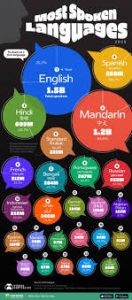
Its speakerLanguage is one of humanity’s most remarkable achievements, serving not only as a means of communication but also as a carrier of cultural identity, knowledge and history. In a world of more than 7,000 languages, there is a stark contrast between the languages with the most and the fewest speakers. According to the latest edition of Ethnologue data (2026), English dominates as the language with the most total speakers reaching around 1.5 billion people, including native speakers and second speakers. Meanwhile, Chinese Chinese excels in the native speaker (L1) category with nearly 988 million to 1.2 billion speakers. These differences reflect the dynamics of globalization, historical colonialism, and economic-political forces. These major languages are widespread due to factors such as trade, education, media, and migration, thus becoming the lingua franca in different parts of the world. On the other hand, hundreds of small languages are on the brink of extinction with only a handful or even one speaker remaining, threatening to lose invaluable global linguistic diversity. This comparison not only highlights demographic imbalances, but also implications for cultural preservation and human linguistic sustainability.

The development of English as the most widely spoken language cannot be separated from the history of the British Empire and the dominance of the United States after World War II. With native speakers of about 372 million people, the language has soared thanks to more than 1.1 billion second speakers who use it for business, science, technology, and entertainment. English is the official or semi-official language in dozens of countries, and dominates the internet, scientific publishing, and international diplomacy. In contrast, Mandarin Chinese, despite having the most native speakers, is more limited to the Chinese region and diaspora communities due to its complex writing system as well as its lack of global adoption compared to English. Large languages like these support social mobility and economic access, but they also create linguistic hierarchies where dominant languages often displace local languages. This phenomenon is known as language shift, where the younger generation prefers prestigious languages for advancement, thus accelerating the decline of minority languages. Linguistic studies show that about 88% of the world’s population speaks one of the 200 largest languages, leaving thousands of other languages with very limited speakers.

At the opposite end of the spectrum, the language with the fewest speakers is often an endangered indigenous language or linguistic isolate. Extreme examples include Taushiro in Peru and Tanema in the Solomon Islands, each of which has only one speaker left. Languages such as Ongota in Ethiopia (less than 10 speakers), Lemerig in Vanuatu (about 2 speakers), and Njerep on the Nigeria-Cameroon border are also in the critical category. These languages are typically spoken by small communities in remote areas, such as hunter-gatherer tribes or small island dwellers, who are vulnerable to disease, intertribal marriage, urbanization, and national language dominance. The extinction of language is not only the loss of vocabulary and grammar, but also the unique knowledge of the ecology, traditional medicine, and philosophy of the society. UNESCO estimates thousands of languages face serious risks in the next few generations, with more than 1,000 languages having fewer than 1,000 speakers. Preservation efforts through digital documentation, community revitalization programs, and bilingual education are crucial to prevent the permanent loss of this heritage.

The comparison between the most and the least spoken languages invites us to reflect on the dynamics of power and diversity in a global society. Major languages facilitate connectivity and progress, but often at the cost of marginalizing minority languages. In today’s digital age, technologies such as AI and language learning applications offer new hope for documenting and reviving rare languages, while global awareness of linguistic rights is on the rise. However, without active intervention from governments, communities, and international organizations, the rate of language extinction is expected to accelerate. Ultimately, maintaining a balance between global communication efficiency and the preservation of local diversity is a shared responsibility. Thus, the study of linguistics is not just about the number of speakers, but rather about valuing each language as a unique reflection of the human experience on Earth. Through this understanding, we can build a more inclusive future where all voices, both loud and almost lost, continue to resonate.

#spokenlanguage

#leastlanguage

#ikahentihu

Language in Social Media: How Are Emojis and Slang Changing the Way We Communicate?

Social media has revolutionized the form of human communication in the 21st century, where language is no longer limited to mere verbal text. Emojis and slang (slang) are emerging as new elements that dominate digital interactions, combining visuals, emotion, and linguistic creativity. This phenomenon reflects a shift from formal communication to faster, concise, and expressive ones. According to various studies, emojis can replace words or phrases, while slang creates a group identity among the younger generation. These changes are affected by character limitations, speed of interaction, and the need for instant emotional expression. While it brings efficiencies, this transformation also poses new challenges in cross-generational understanding and cultural contexts.

Emojis serve as visual language that enriches and simplifies communication. Widely introduced since Unicode supported it in 2010, emojis are now used billions of times every day on platforms like WhatsApp, Instagram, and TikTok. Research shows that emojis increase the emotional understanding of messages significantly, reducing the ambiguity of plain text that is often misinterpreted. For example, emojis can replace “laughing out loud,” while implying “cool” or “trending.” In Indonesia, users often combine emojis with regional or national languages, such as “Very tired” or “Let’s eat”. Emojis also act as tone markers, similar to intonation in spoken conversation. However, emoji interpretations can differ between cultures and platforms, potentially leading to misunderstandings.

Slang or slang on social media is growing very rapidly, especially among Gen Z and millennials. Terms such as “gas”, “glow up”, “toxic”, “cringe”, “woke”, or “sus” spread quickly through TikTok and Twitter/X. In Indonesia, local slang such as “kece”, “bucin”, “santuy”, “ngab”, “bestie”, or a mixture such as “chill aja bro” became the norm. Slang creates a sense of community and subcultural identity, but it also accelerates the change in formal language vocabulary. The phenomenon of code-mixing between Indonesian, English, and regional languages is becoming more common, resulting in dynamic hybrid expressions. The use of slang makes communication more relatable and quick, but it can reduce the depth of serious discussions and make it difficult for older age groups or outside the community to understand.

The changes that emojis and slang bring are not only technical, but they also affect mindsets and social relationships. Communication has become more visual, emotional, and contextual, where meaning often relies on a combination of text, emojis, memes, and reactions. This increases digital emotional intelligence, but lowers formal writing skills and patience to read long texts. In the professional realm, many companies are now embracing this relaxed style of communication, while in education there are concerns about the decline of traditional literacy skills. In addition, slang and emojis accelerate the spread of global trends, so local languages continue to adapt. Studies show that emojis contribute up to 63% variation in the effectiveness of digital communication, signaling how dominant this non-verbal element is.

Overall, emojis and slang have changed the paradigm of communication from linear and verbal to multimodal and dynamic. Although it brings efficiency, emotional closeness, and new creativity, this phenomenon also raises the issue of generation gaps, ambiguity of meaning, and the potential for erosion of formal language. In the digital age, it is important for educators, linguists, and consumers to strike a balance between innovation and preservation. Language in social media reflects an increasingly fast and visual society; Understanding it is not only about following trends, but also maintaining the essence of effective and meaningful communication. Going forward, more in-depth research on the long-term impact on cognition and culture will be increasingly relevant amid the development of AI and new platforms.

#emoji

#slang

#ikahentihu


Living Ancient Languages: Latin, Sanskrit, and Modern Greek

Ancient languages such as Latin, Sanskrit, and Greek are often considered historical artifacts, even though they are still “alive” today in different forms. Latin, Sanskrit, and Ancient Greek are the classical languages of Indo-Europe that were once the medium of great civilizations. Although it is no longer the primary mother tongue for millions of people, all three continue to exist through direct descent, ritual use, scientific, and revitalization efforts. Latin evolved into Romance languages, Sanskrit retained a sacred and intellectual role in India, while Modern Greece is a direct continuation of Ancient Greece with remarkable continuity for over 3,000 years. This continuity shows that languages are not only dead or living binary, but can evolve, adapt, and maintain their cultural and intellectual heritage in the modern era.

Latin is often referred to as a dead language because it has no native speakers, yet its influence is very much alive in science, law, medicine, and religion. Classical Latin evolved into Vulgar Latin which gave birth to modern Romance languages such as Italian, French, Spanish, Portuguese, and Romanian. Latin vocabulary dominates scientific terminology (e.g., homo sapiens, viruses, bacteria) and legal phrases such as habeas corpus, pro bono, and ad hoc. In the Catholic Church, Latin remains the official language of the Vatican, with a small community practicing contemporary Latin for everyday conversation. The teaching of Latin in schools and universities continues as it helps to understand the roots of the European language and train the logic of thinking. Latin heritage proves that a language can “die” as a colloquial language and yet remain the foundation of modern civilization

. Sanskrit, the sacred language of Hindus and Buddhists, is experiencing an exciting resurgence in modern India. As the classical language used in the Vedas, Upanishads, and the Mahabharata-Ramayana epics, Sanskrit was once the lingua franca of South Asian intellectuals. Although the number of native speakers is very small, revitalization movements such as Samskrita Bharati have trained millions of people to speak Sanskrit conversationally. Some states in India such as Uttarakhand make it a second official language. Thousands of words in Indonesian, Old Javanese, and modern Indian languages are derived from Sanskrit (e.g., teacher, king, private, human, dharma). Its use in religious rituals, astrology, yoga, and classical literature keeps it alive as a spiritual and cultural language. The revitalization of Sanskrit reflects the efforts to maintain the identity of Indian civilization in the midst of globalization.

Modern Greek is the most dramatic example of the continuity of ancient languages. In contrast to Latin which evolved into new languages or more static Sanskrit in classical form, Modern Greek (Dimotiki) is a direct continuation of Ancient Greece through Koine and Byzantine Greece. The alphabet, core vocabulary, and many grammatical structures are still recognizable despite phonological changes and simplifications. Modern Greek speakers can read ancient texts with practice, especially Koine texts such as the New Testament. It continues to be spoken by more than 13 million people in Greece and Cyprus as a national language of daily life, media, education, and literature. This continuity makes Greek one of the languages with the longest written history in the world, connecting Homer, Plato, and Aristotle with contemporary society.

Overall, Latin, Sanskrit, and Modern Greek prove that ancient languages can survive through different mechanisms: evolution (Latin), sacred revitalization and education (Sanskrit), and historical continuity (Greek). These three not only preserve ancient knowledge, but also continue to shape ways of thinking, cultural identity, and the advancement of human science. In today’s digital age, documentation, learning applications, and preservation movements are increasingly ensuring that this linguistic heritage will not become extinct. Understanding the sustainability of these languages reminds us that language is a bridge between generations and between civilizations, whose richness must be preserved for a more rooted and wise future of human civilization.

#latin

#sanskrit

#greek

#ikahentihu


Sign Language as an Equivalent Language: The International Sign Language Story

Sign language is a natural language that is complete and equivalent to spoken language, having its own complex grammar, syntax, semantics, and pragmatics. In contrast to the old assumption that it is a “simple sign language” or simply gestures, modern linguists since William Stokoe in 1960 have proven that sign language has a full linguistic structure, including visual phonology (chereme), morphology, and rich discourse. Worldwide, there are more than 300 different sign languages, each developing naturally in the Deaf community. International Sign Language (International Sign (IS) emerged in response to the need for cross-border communication among the global Deaf community. Official recognition of sign language as an equal language has grown stronger following the 2006 UN Convention on the Rights of Persons with Disabilities (CRPD), which emphasized the linguistic rights of the Deaf community. However, the journey towards equality is still long.

The history of International Sign Language dates back to international meetings of the Deaf community since the beginning of the 20th century. The World Federation of the Deaf (WFD) which was founded in 1951 became the main catalyst. At the WFD Congress, delegates from different countries used a naturally developed mixed sign system, which was later called the International Sign. IS is not an artificial language like Esperanto, but rather a pidgin or contact language that takes iconic elements from various national sign languages. It relies heavily on iconism (similarity of the form of the sign to meaning) and visual flexibility. For example, cues for “computer” or “internet” are easy to understand intuitively. This development is similar to the creole that emerged from language contact, where the Deaf community creatively created an effective way of communicating without relying on one particular national language.

In contrast to national sign languages such as American Sign Language (ASL), British Sign Language (BSL), or Indonesian Sign Language (BISINDO), International Sign is more flexible and lacks strict and rigid grammar. ASL and BISINDO have complex and unique grammatical structures, while IS relies more on context, facial expressions, and expressive body movements. This makes IS particularly effective for international conferences, workshops, and sporting events such as the Deaflympics. However, due to its pidgin-like nature, IS has a more limited vocabulary and grammar than the national sign language. The international Deaf community continues to develop it organically, with contributions from various countries, including BISINDO speakers who are increasingly active in global forums. The existence of IS proves that the Deaf community is able to create dynamic cross-cultural communication tools.

The struggle to make sign language an equal language still faces many challenges. In many countries, including Indonesia, sign language has not been fully integrated into formal education, public services, and the media. Adequate simultaneous interpretation is still scarce, so access to information for people with hearing disabilities is often limited. At the international level, the use of IS in the United Nations and global forums is an important milestone, but the dominance of spoken language remains strong. Linguistic research shows that Deaf children who grow up with sign language from an early age have cognitive, social, and emotional development on par with hearing children. Therefore, the recognition of sign language as the first mother tongue for the Deaf community is a human rights issue. The success stories of many international Deaf activists show that when sign language is valued, Deaf cultural identity can flourish proudly and independently.

Overall, International Sign Language is an inspiring story of the resilience, creativity, and struggle of the Deaf community in affirming linguistic equality. He proved that language is not just about sound, but about meaning, identity, and connection between people. In the era of globalization, strengthening IS and national sign language is essential to realize true inclusion. The government, academia, and society need to continue to encourage bilingual education (sign language and spoken language), linguistic research, and better representation in the media. Sign language is not a “substitute” for spoken language, but rather a rich and equal language system that enriches human diversity. By appreciating it, we not only empower the Deaf community, but also expand our understanding of what language and human identity are.

#singlanguage

#language

#ikahentihu


The Influence of English on Regional Languages in Indonesia

English as a global lingua franca has had a very significant influence on Indonesia’s linguistic landscape, especially in hundreds of regional languages. Since the era of globalization and information technology advancements, English has spread through education, mass media, entertainment, business, and social media. Indonesia, with more than 700 regional languages, faces a complex dynamic where the national language (Bahasa Indonesia) and English together dominate the public sphere, while regional languages are increasingly pushed into the domestic and informal spheres. This phenomenon reflects the language shift triggered by socio-economic factors, urbanization, and the perception that English is a symbol of modernity and social mobility. While this influence brings benefits in the form of vocabulary enrichment, it also raises serious concerns about the preservation of local cultural identity.

One of the most visible forms of influence is vocabulary borrowing and code-mixing. Young people in various regions often insert English words into regional language conversations, such as “status update”, “meeting tomorrow”, “chill first”, or “the vibe is good”. In Java, expressions such as “very happy” or “sorry ya” are often mixed with krama or ngoko. In West Sumatra, Minangkabau speakers adopt technological terms such as “download”, “upload”, and “gadget”. This code-switching phenomenon is increasingly intense on social media such as Instagram and TikTok, where Sundanese, Batak, or Bugis youth switch between regional languages, Indonesian, and English in one sentence. This process enriches expression but slowly erodes the original vocabulary of the regional language, especially in the younger generation who are more fluent in English than their mother tongue.

The most worrying negative impact is the threat of extinction of regional languages. According to data from the Language Agency, hundreds of regional languages in Indonesia are classified as vulnerable or critical. The dominance of the Indonesian language in education and government, coupled with the prestige of English in urban circles, led to a drastic decline in active speakers of regional languages. In many families, parents encourage children to master English for the sake of the future, while the local language is only spoken occasionally with grandparents. As a result, there is an intergenerational gap where children no longer inherit the ancestral language in full. Research shows that in big cities, regional languages are increasingly limited to family domains and cultural rituals, while the economic, technological, and entertainment domains are dominated by the British and Indonesian. This threatens not only linguistic diversity but also local knowledge, oral literature, and the cultural values contained in it.

On the other hand, the influence of English also brings positive aspects in the form of enrichment and adaptation. Many regional languages create new words or adapt English terms with local phonology, thus remaining relevant to the times. For example, modern concepts such as technology, business, and psychology can be expressed more precisely through word loans. Bilingualism and multilingualism involving regional languages, Indonesian, and English have been proven to increase the cognitive flexibility of the younger generation. Some communities also use this influence for revitalization, such as creating YouTube content or regional songs with English elements to make them more attractive to generation Z. Thus, regional languages are not static but continue to evolve, although they must still be maintained in balance so as not to lose their identity.

Overall, the influence of English on regional languages in Indonesia is a two-sided phenomenon that reflects the tension between globalization and cultural preservation. Without systematic efforts such as regional-based bilingual education, digital documentation, and public awareness campaigns, many regional languages are at risk of extinction in the next few generations. Governments, academics, and communities need to collaborate to strengthen the position of regional languages through local curriculum, creative media, and linguistic research. Language is not only a means of communication, but a carrier of ancestral identity, knowledge, and heritage. Maintaining a balance between mastering English as a global capital and preserving regional languages as cultural roots is both a challenge and a shared responsibility to maintain Indonesia’s linguistic richness in the digital era.

#english

#language

#indonesian

#ikahentihu

Language and Cultural Identity: How Does Language Shape the Human Way of Thinking?

Language is one of the most fundamental elements in human life, not only as a means of communication but also as a shaping of cultural identity and cognition. The Sapir-Whorf hypothesis or the theory of linguistic relativity, put forward by Edward Sapir and Benjamin Lee Whorf in the early 20th century, became the main foundation of this discussion. This theory states that the structure and vocabulary of the language a person uses influences the way he or she understands, categorizes, and interacts with reality. The strong version (linguistic determinism) claims that language determines the mind completely, while the weak version (linguistic relativity) is more scientifically accepted, that is, language influences or shapes perception without completely restricting it. In the context of cultural identity, language functions as a mirror as well as a shaping of values, norms, and the collective mindset of a society. The evolution of languages influenced by history, migration, and intercultural contacts further enriches the diversity of human ways of thinking around the world.

One of the strongest evidences of linguistic relativity is seen in the color category. Russian speakers distinguish “siniy” (dark blue) and “goluboy” (light blue) as two separate colors, so they are quicker to distinguish shades of blue in visual perception experiments than English speakers who use only one word “blue”. Similarly, some languages such as the Himba language in Namibia do not distinctly distinguish between blue and green, which affects the speed and accuracy of color recognition. This example shows that linguistic boundaries affect the brain’s cognitive processing. In addition, languages with grammatical gender systems such as German or Spanish make their speakers more likely to associate masculine or feminine traits on inanimate objects according to the gender of the word, affecting the description and emotional perception of the object. Modern neurocognitive research using EEG and fMRI is increasingly supporting that language can “shape” brain activity in perception processing.

In the spatial and time dimensions, the influence of language on the way of thinking is becoming clearer. The Guugu Yimithirr language in Australia uses absolute cardinal directions (north, south, east, west) instead of relative (left, right), so speakers have a very sharp spatial orientation and almost always know the cardinal direction. The Hopi language Whorf researched does not have a strict tense of time like English, so the concept of time is more cyclical and manifestation than linear. Speakers of a vertically time-oriented language (such as Chinese) tend to describe the future at the “bottom” and the past at the “top,” in contrast to English speakers who see time flowing horizontally from left to right. This proves that language not only describes reality, but also helps shape the mental framework that humans use to navigate the world. Cultural identity is also formed through these linguistic patterns, strengthening the sense of togetherness and uniqueness of the group.

Language also shapes cultural identity through emotional vocabulary, kinship relationships, and social values. Some languages in Papua New Guinea have dozens of words for very specific types of family relationships, which affect the way individuals view social responsibility. In collectivist societies such as Japan, the intricate use of honorifics (keigo) reinforces hierarchical awareness and group harmony. In contrast, more egalitarian languages such as modern English tend to encourage an individualist mindset. Contemporary studies show that bilingualism or multilingualism allows a person to “switch” their mindset according to the language used, known as cognitive flexibility. However, globalization and the dominance of English also threaten the extinction of regional languages, which means the loss of unique ways of thinking and certain cultural identities. Language preservation is a crucial issue in maintaining the cognitive diversity of mankind.

Overall, language and cultural identity are profoundly intertwined in shaping the way people think. Although not completely determining, language acts as a lens through which we filter and color our experience of the world. In today’s digital and multicultural era, understanding linguistic relativity is becoming increasingly important for education, psychology, diplomacy, and artificial intelligence. Language is not just a tool, but the foundation of humanity’s identity and intellectual property. By respecting the diversity of languages, we also appreciate the diversity of ways of thinking that enrich civilization. Understanding these relationships opens the door to more empathetic cross-cultural communication and cognitive innovation in the future.

#language

#culturalidentity

#ikahentihu

The Evolution of French in France, Canada, and Africa

French is one of the most important Romance languages in the world with its roots in Vulgar Latin brought by Roman troops to the territory of Gaul (present-day France) in the early centuries AD. Its evolution began from Old French (langues d’oïl) to reaching a modern standard form through the process of standardization in France in the 17th and 18th centuries, most notably through the Académie Française founded in 1635. The global spread of this language occurred through French colonialism beginning in the 17th century, which brought the French language to North America (Canada) and then to Africa in the 19th century. Today, more than 300 million people speak French, with the majority of speakers being outside of European French. Developments in three major regions—France, Canada (especially Quebec), and Africa—show divergences influenced by geographical isolation, contact with local languages, and different socio-political dynamics. Although still a single language, these variants reflect rich cultural adaptations.

In France as the center of origin, the French language has evolved towards a highly codified form of standard. Pronunciation tends to be nasal and clear front vowels, with an emphasis on clarity and elisi (sound removal). The vocabulary was heavily influenced by classical Latin, Italian, and more recently English despite attempts at purification through the Toubon laws. Formal grammar is highly regarded, especially in official writing and media. However, at the regional level there are still dialect variations such as in Provence or Alsace. Modern evolution in France was more influenced by globalization, immigration, and technology, which made the language more dynamic while maintaining its image as a world-class language of diplomacy and literature. The Paris Standard has become a prestigious reference for many francophone countries.

In Canada, particularly Quebec, the French language has developed differently since the founding of Nouvelle-France in the 17th century. The Québécois variant retains many of the characteristics of Old and Medieval France that had been lost in post-Revolution France. The pronunciation is more “soft” with vowel diphthongization (e.g. “moi” becomes similar to “moé”, “toi” becomes “toé”), as well as a more posterior “r”. The vocabulary has largely adopted unique terms such as dépanneur (grocery store), magasiner (shopping), fin de semaine (weekend), and strong influences from English as well as Amerindian. Grammar is somewhat simpler in everyday conversation, with a wider use of “tu”. The Quiet Revolution (Révolution tranquille) in the 1960s strengthened Quebec’s linguistic identity through legislation protecting the French language from British domination. As a result, Québécois sounds very different to European French speakers, sometimes requiring ear adjustments.

In Africa, French has had the most dynamic and rapid evolution as it serves as the lingua franca in more than 20 former colonized countries. In countries such as Senegal, Côte d’Ivoire, Cameroon, or the Democratic Republic of the Congo, African French (le français africain) is heavily influenced by local languages (Wolof, Dioula, Lingala, etc.), resulting in regional variants with more rhythmic accents, strong intonation, and grammatical simplifications. New vocabulary emerged such as enjailler (partying), griller (failing), or creative phrases that reflected the urban reality of Africa. In many places, French is not the primary mother tongue but rather a second language or education, resulting in an intense pidgin-like or code-switching form. The number of French speakers in Africa now exceeds that of Europe and is projected to dominate the francophonie by 2050. This evolution created a wealth of new expressions, although it sometimes gave rise to debates about the “purity” of language.

Overall, the evolution of the French language shows how language can adapt to new environments without losing its core identity. The differences between the variants—phonological, lexical, and pragmatic—reflect colonial history, cultural resistance, and the creativity of the speakers. In the era of globalization, media, music (such as French Afrobeats or Quebec songs), and migration have further enriched the interactions between these variants. French is no longer a mere French, but a plural global language. Understanding its evolution helps us appreciate linguistic diversity and the importance of preservation in the midst of English dominance. For students, translators, and diplomats, awareness of regional variants is the key to effective communication in the increasingly wide francophone world.

#french

#canada

#africa

#ikahentihu