The Linguistic Wonders of Europe: 200 Languages That Unite and Separate the Blue Continent

Europe is often referred to as the smallest continent in the world, but its linguistic richness is incredible. More than 200 languages and dialects live in the region, from the Atlantic Ocean to the Ural Mountains. European languages are not just a means of communication, but a reflection of the history of national migration, royal conquest, and cultural exchange over thousands of years. From the Latin that was the root of the Romance language to the Viking influences that shaped the Scandinavian language, Europe is a living linguistic laboratory. This diversity is increasingly felt in the European Union, which now has 24 official languages, plus dozens of protected minority languages. Each language carries a unique identity, from the soft Italian accent to the emphatic rhythm of German, creating a cultural mosaic that makes Europe so captivating. Even in today’s digital age, European languages are constantly evolving, adapting to technology while retaining their deep ancient roots.

The majority of European languages come from the Indo-European family, the world’s largest language family that covers about 90 percent of the continent’s population. This clump is divided into several main branches that are very different. Romance languages, of Latin descent, include French, Spanish, Italian, Portuguese, and Romanian; These languages are gentle and romantic, widely used in art, literature, and diplomacy. Meanwhile, the Germanic branch produced a more assertive and efficient English, German, Dutch, Swedish, and Danish languages, with a very strong global influence thanks to British colonialism and German economic power. The Slavic branch includes Russia, Poland, Czechoslovakia, Bulgaria, and Ukraine, which are rich in consonants and are often associated with epic literature as well as imperial history. There are also the almost extinct Celtic branches such as Ireland and Wales, as well as the Greek and Albanian languages that stand alone as single branches. This diversity shows how the migrations of ancient tribes such as the Aryans, Romans, and Slavs have shaped the complex and interconnected linguistic map of Europe.

Not all European languages are of Indo-European origin. Some of them are living proof that Europe was once home to older ethnic groups. Uralis, such as Finnish, Hungarian, and Estonian, are not at all related to Romance or Germanic; its origins are precisely from the Siberian region thousands of years ago. The Basque languages of Spain and France are isolated languages that have no close relatives, so linguists are still solving the mystery of its origins today. The Turkish language in European Turkey and some communities in the Balkans also adds color, while the Sami language in Northern Scandinavia reflects the life of indigenous peoples in the Arctic circle. These minority languages are often endangered due to the dominance of national languages, but revitalization programs in the European Union have managed to keep dozens of them alive, including Breton in France and Sorb in Germany. Their existence reminds us that Europe is not a monolithic continent, but rather a mosaic full of surprises.

The history of the evolution of European languages cannot be separated from major world events. The Roman conquest spread Latin throughout Western and Southern Europe, which later evolved into the modern Romance language. The invasion of the Germanic nations in the Middle Ages brought Germanic roots to Britain and Scandinavia, while the Ottoman Empire introduced Turkish elements to the Balkans. The Enlightenment and Industrial Revolution made French and English the languages of international diplomacy and science. In the 20th century, World War II and the Cold War affected the status of Russian and German languages, while globalization made English dominate business and the internet. Currently, the European Union actively promotes multilingualism through the Erasmus program and education policies that require students to learn at least two foreign languages. European languages also continue to be influenced by immigration and technology; Words like “selfie” or “hashtag” are now part of almost all languages on the continent.

In the midst of the challenges of globalization and artificial intelligence, European languages remain a vital cultural bridge. Language is not just a means of communication, but a living heritage that carries stories, values, and identities. The European Union is investing billions of euros in the preservation of minority languages, while translation and online learning apps are making European languages more accessible to younger generations around the world. Going forward, European languages will continue to evolve, perhaps with more borrowed words from Asia and Africa, but their rich roots will remain the foundation of the continent’s diversity. For travelers, students, or business people, understanding the European language means opening the door to the hearts of its people. Thus, the languages of Europe are not just words, but the soul of the continent that continues to sing in various rhythms, from Paris to Moscow, from Lisbon to Helsinki.

#europe

#europeanlanguages

#indo-europe

#ikahentihu


Learn Which One First, German or Dutch?

German and Dutch are two West Germanic languages that have significant similarities in vocabulary and grammatical structure, but also differences in pronunciation, grammatical complexity, and learning difficulties for native English or Indonesian speakers. This article explores the optimal learning sequence between the two, based on a literature review from current linguistic sources. The findings suggest that getting started with Dutch is easier because the grammar is simpler, although German offers broader benefits in economic and academic contexts. Recommendations are given for learners who want to master both, with an estimated shorter learning time if Dutch is learned first. This article aims to assist foreign language learners in making strategic decisions.

Language Learning, Linguistic Similarities, Language Difficulties.

In the era of globalization, learning foreign languages has become an essential skill for careers, education, and cultural interaction. German and Dutch, as part of the Germanic language family, are often an option for learners interested in Central and Western Europe. German is the official language in Germany, Austria, and Switzerland, with over 100 million native speakers, while Dutch is spoken in the Netherlands and Belgium, with about 24 million speakers. The main question for learners is: which one should be studied first? This article discusses the comparison of the two languages in terms of similarities, differences, and benefits of learning sequences. Based on the perspective of English learners (who have similarities to both), we suggest an approach that maximizes efficiency. This research is relevant for Indonesian learners, considering that the Indonesian language has Dutch influence from the colonial period, which can facilitate access to the Netherlands.

The German and Dutch Literature Review come from the same root, which is the West Germanic language, so it has a similarity of up to 80% in basic vocabulary.

For example, the word “house” in English is similar to “Haus” (German) and “huis” (Dutch). However, the main difference lies in the pronunciation: the Dutch have a rough guttural “g” sound, while the German focuses more on the sharp “s”.

German grammar is more complex with four cases (nominative, accusative, dative, genitive) and three genders (masculine, feminine, neutral), while the Netherlands has only two genders and does not use a complicated case system. Studies show that for English speakers, Dutch is easier to learn due to grammatical simplicity, with an estimated time of 600 hours to reach B2 level, compared to 900 hours for German.

The benefits of learning one language before another include knowledge transfer: mastering Dutch first makes it easier for German due to the similarity of vocabulary, while conversely it may be more challenging because the complexity of German can frustrate learners.

The literature also highlights that learning Germanic languages improves cognitive abilities and facilitates other languages such as Swedish or Norwegian.

Data was collected from web searches with keywords such as “similarities between German and Dutch”, “which is easier German or Dutch”, and “benefits of learning Germanic languages”. Sources are selected from trusted sites such as Reddit, Quora, YouTube, and linguistic blogs, with a focus on publications between 2018-2026. A total of 20 sources were analyzed qualitatively, grouped into themes: similarities/differences, difficulties, and learning sequences. The analysis was conducted by comparing expert opinion and empirical data, such as time estimates from the U.S. State Department.

Results and Discussion

The results of the review showed significant similarities: the two languages have similar sentence structures, with the second verb often placed at the end in subordinate sentences. However, German is more difficult due to its case system, which requires changing the form of nouns based on sentence functions. For English learners, Dutch is considered 50% faster to master due to the lack of cases and the influence of stronger English vocabulary. Discussion of the sequence: Starting with the Netherlands provides an easier foundation, allowing transfers to Germany with high efficiency. Conversely, learning German first can make the Netherlands feel simple, but the risk of fatigue is greater.

The economic benefits of German (as the third largest language in the world) make it a priority for careers, while Dutch is useful for businesses in Northern Europe. In Indonesia, Dutch historical influences (such as borrowed words such as “office” from “kantoor”) made it easier for the Netherlands as a first step.

Cognitively, sequential learning improves memory and multitasking skills.

Comparison Table:

Aspects German Dutch Recommendations for Learners
Grammar Complex (4 cases, 3 genders) Medium (2 genders, no cases) The Netherlands is easier to start
Pronunciation Sharp, focus on the ‘s’ Rough, guttural ‘g’ Train the Dutch first to adapt
Study Time 900 hours for B2 600 hours for B2 Start Dutch for efficiency
Benefits Economics, academic European business, culture Germany for a long-term career

Conclusion

Based on the analysis, it is recommended to learn Dutch first because of its simplicity, which makes the transition to German easier. This optimizes time and reduces frustration, especially for beginners. However, if the main goal is a career in Germany, the German priority is more appropriate. Future research may explore this sequence in non-English learners, such as Indonesian speakers. Learning Germanic languages not only opens up global opportunities but also enriches cultural understanding.

#dutch

#german

#germany

#ikahentihu

The Impact of Artificial Intelligence on Education

The Impact of Artificial Intelligence on Education in the Digital Age

Artificial Intelligence (AI) has revolutionized various sectors, including education. This article discusses the impact of AI on the teaching and learning process, from the personalization of learning to the ethical challenges that arise. Based on an analysis of the current literature, AI can improve educational accessibility, but it also has the potential to weaken students’ critical skills if not managed properly. Findings show that intelligent AI integration can improve educational efficiency by up to 30-40% in developing countries such as Indonesia.Keywords: Artificial Intelligence, Digital Education, Learning Personalization, AI Ethics.

In today’s digital era, education is facing a major transformation due to technological advancements, especially Artificial Intelligence (AI). AI, defined as the ability of machines to mimic human intelligence such as learning and decision-making (Russell & Norvig, 2020), has become a key tool in improving the quality of education. In Indonesia, where access to education is still a challenge in rural areas, AI offers innovative solutions such as adaptive e-learning platforms. This article aims to explore the positive and negative impacts of AI on education, with a focus on global and local contexts. The approach used is a literature review from the latest scientific sources, including journals such as the Journal of Educational Technology and reports from UNESCO. Literature Review AI has been applied in education through various forms, such as Intelligent Tutoring Systems (ITS) and learning data analysis. According to Baker (2019), ITS can adjust subject matter based on students’ abilities, thereby increasing knowledge retention by up to 25%. For example, platforms like Duolingo or Khan Academy use machine learning algorithms for personalization. On the other hand, challenges arise in the form of algorithmic bias. Research by Buolamwini and Gebru (2018) shows that AI is often discriminatory against minority groups, which can exacerbate educational inequalities. In Indonesia, a survey by the Ministry of Education and Culture (2022) indicates that only 60% of teachers are ready to integrate AI, so further training is needed.

This article uses a systematic literature review method. Data was collected from databases such as Google Scholar, PubMed, and JSTOR with the keywords “AI in education” and “impact of AI on learning”. Inclusion criteria include publications between 2018-2026, a focus on primary to higher education, and relevance to the digital context. A total of 25 articles were selected after an initial screening from 150 sources. The analysis was carried out qualitatively, with the grouping of main themes: positive, negative, and recommendation impacts.

Results and Discussion

The results show that AI has a major positive impact in three aspects: Learning Personalization: AI can analyze student data in real-time, so teachers can focus on students who need extra help. A study by Siemens (2013) found an increase in student achievement by 15-20% through learning analytics.

Accessibility: In developing countries, AI enables distance education through chatbots and mobile apps. For example, during the COVID-19 pandemic, the use of AI in Indonesia increased by 200% (Bappenas, 2021).

Administrative Efficiency: AI automates assessment and administration, saving teachers up to 40% of their time (McKinsey Global Institute, 2019).

However, the negative impact cannot be ignored: Loss of Human Interaction: Reliance on AI has the potential to reduce students’ social skills (Turkle, 2017).

Ethical Issues: The privacy of student data is an issue, with the risk of breaches such as the one in the Cambridge Analytica case.

Digital Inequality: In Indonesia, only 70% of the population has stable internet access (BPS, 2023), so AI can widen the gap.

This discussion emphasized the need for regulations, such as the AI ethics guidelines from UNESCO (2021), to maximize benefits while minimizing risks.

Conclusion

AI has great potential to revolutionize education, but its implementation must be accompanied by a holistic approach that considers ethical and inclusive aspects. In Indonesia, the government is advised to improve digital infrastructure and teacher training. Future research could focus on the long-term evaluation of the impact of AI in rural schools. BibliographyBaker, R. S. (2019). Challenges for the Future of Educational Data Mining. Journal of Educational Data Mining.

#AI

#ikahentihu


Homecoming, the Craziest Sociological Phenomenon in the World

Even though Eid is less than a week away, chatter in family groups, offices, or neighbors’ chats has started to shift: plane tickets are sold out, train ticket prices soar crazy, or the classic question “this year riding a motorbike again, right?”. Eid homecoming is not just an annual tradition; It is the most massive, most extreme, and perhaps the most “crazy” sociological phenomenon in the world. Where else are hundreds of millions of people even in peak years reaching nearly 200 million willing to risk their lives, time, energy, and savings just for a simultaneous “homecoming” procession within a week or two? The realization of the 2025 Eid homecoming will reach around 154.6 million people (down about 4-5% from 2024 which will be 162 million, and far from the initial projection of 146 million due to weakening economic factors). This is equivalent to more than half of Indonesia’s population moving simultaneously. It is not an ordinary migration like a vacation in another country; It’s a collective ritual that involves all modes of transportation: full planes, overcapacity trains, long queue buses, to millions of motorcycles that slide on highways and arteries. We are willing to queue for hours at the terminal, get stuck in traffic for tens or even hundreds of hours, or force ourselves to drive hundreds of kilometers just to arrive at our hometowns before the Eid prayer. For many migrants, homecoming is not just a longing for parents or relatives, but a stage to prove one’s existence. We want to show that in a big city we are “already people”: an established job, a car (even if it is a long loan), a house (a 20-year mortgage), or at least a “successful” appearance. Our education system and culture rarely emphasize that true success does not need to be shown. As a result, the highway turns into a big theater: the latest car is parked conspicuously in the yard of the parents’ house, new gold jewelry is worn to the village recitation, or stories of “big projects” are distributed at the dinner table even though the installments may still be gaping. This phenomenon reflects the paradox of Indonesia’s severe urbanization. Big cities like Jakarta, Surabaya, or Bandung offer economic opportunities, but they also create inequality, insecurity, and alienation. Hometown becomes a “stage” for vertical social mobility that is exhibited. From a sociological perspective, this is similar to Émile Durkheim’s forced mechanical solidarity: going home not because of natural organic bonds, but because of the pressure of social norms so as not to be excluded from the extended family or village community. Historically, homecoming has existed since the colonial era (as a “homecoming” for contract workers), but it exploded in the Reform era thanks to the growth of the urban middle class and toll road infrastructure. From an economic perspective, homecoming does bring “blessings” even though 2025 feels more slack. The money turnover is predicted to be around IDR 138-145 trillion (down 12% from 2024), but it is still significant: transportation tickets, fuel, tolls, lodging, souvenirs, traditional market shopping, to village MSMEs that are suddenly crowded. Destination areas such as Central Java (tens of millions of travelers), East Java, and West Java received a large injection of best-selling rest areas, full food stalls, batik sellers or special foods with double profits. But it’s also a national waste of energy: fuel consumption soars, air pollution increases dramatically, productivity in big cities drops temporarily, and environmental impacts such as plastic waste in rest areas or carbon emissions from millions of vehicles. The most tragic: the salvation of the soul. Every year hundreds of people die on the road. By 2025, the fatality rate will drop significantly (about 28% lower than 2024, with fatalities falling by as much as 35% on some records), thanks to close surveillance, raids, and rising awareness. But the majority of victims remain the cheapest but most risky fashion motorcyclists. We call homecoming an “economic blessing”, but ignore the social costs, lives lost, and incalculable physical-psychological exhaustion. Why are we obsessed with our “physical hometowns”, but rarely care about “going home” spiritually? Ramadan fasting should bring us back to our true selves: honesty, simplicity, humility, sincerity. But homecoming often adds a layer of falsehood of overspending for the sake of prestige, pretending to be successful for the admiration of the family, or stress because they are unable to “show” anything. Compare it to similar traditions in other countries: Thanksgiving in the US or Chinese New Year in China also involves going home, but rarely this extreme in scale, risk, and prestige pressure. Homecoming has a beautiful side: strengthening friendship, distributing sustenance to the village, a moment of family reflection. But the essence of friendship can be done at any time of routine video calls, sending monthly money, or going home outside the season without pressure from the masses. There is no need to risk your life in traffic jams. This year (or years to come), try asking yourself: am I coming home to resume genuine affection, or just to show off my fragile accomplishments? If the intention is more inclined towards the latter, it may be better to stay at home, pray tarawih alone, read the Qur’an more deeply, and reflect on why our souls are so thirsty for the confession of others. Perhaps the real “homecoming” is not to a physical address, but to a calmer, more sincere, and more free heart from prestige. Homecoming is not the problem; obsessions, falsehoods, and imbalances behind them that we need to re-examine before it’s too late.

#homecoming

#mudik

Suggestopedia Learning Methods

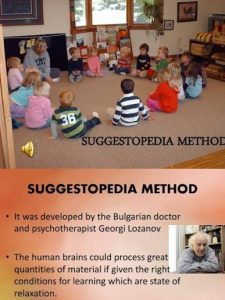
Suggestopedia is a learning method designed by Georgi Lozanov to maximize learning potential by creating a relaxed, fun, and low-stress atmosphere using classical music, positive suggestions, and a comfortable classroom environment. The goal is to remove psychological barriers, allowing students to absorb information consciously and subconsciously faster.

Main Characteristics of Suggestopedia:

Relaxed Environment: Classes are comfortably organized, often with dim lighting, lounge chairs, and classical music playing during the delivery of material (first & second concerts).

Positive Suggestions: The teacher acts as an authority figure who builds students’ confidence, reassuring them that learning is easy and fun.

Student & Teacher Roles: Students often take on new identities (roles) to reduce anxiety, while teachers create supportive interactions.

“Peripheral” learning: Learning materials are mounted on the walls of the classroom for students to learn unconsciously.

Learning Steps (Procedure):

Introduction: The teacher establishes a relaxed atmosphere and gives positive suggestions.

First Concert (Active): The teacher reads the material/story with special intonation accompanied by passionate classical music.

Second Concert (Passive): Students listen to the material in a relaxed manner (often closing their eyes) accompanied by quieter classical music.

Production/Activation: Students participate in role-plays, games, or discussions to practice the material.

Advantages and Disadvantages:

Pros: It is very effective for increasing motivation, lowering anxiety, and improving memory retention, especially in language learning.

Disadvantages: Requires a special environment, more costs, specially trained teachers, and is sometimes considered less scientific by some parties.

This method, also known as desuggestopedia, emphasizes that learning a language or other material does not have to be tense, but can be through a humanistic approach that humanizes students.

#suggestopedia

#teachingmethod

Panic Bullying in an Era of Uncertainty

Re-reading the simulation of the impact of the increase in oil prices. The figure is dizzying: for every 10 dollar increase above the assumption of the state budget, the state must increase the subsidy burden by Rp 80 trillion. Now the price is 92 dollars. This means that Rp 160 trillion must be sought.

But what bothers me more is not that number. When I opened social media, my timeline was hot. It is not because of policy discussions. But because of hunting.

A housewife reuploaded her video while shopping. “You know, mothers buy cooking oil, later the price will go up because of them.” The comments below are cruel: greedy, stupid, brainless. In fact, maybe the mother was just panicking. Maybe he was afraid that he wouldn’t be able to feed his family if prices kept rising.

This phenomenon has a name: panic bullying. The act of bullying others in response to fear or collective panic. And in the age of social media, it spreads faster than fire.

When Fear Looks for a Black Goat

Simple psychology is that when we are afraid, we are looking for something to blame. In the current situation of global conflict—the US and Iran attacking each other, the Strait of Hormuz being disrupted, oil prices soaring—the fear is real.

But since most of us can’t shoot missiles or stop wars, we look for easier targets. Mothers who overspend. Traders who raise prices. Neighbors who have more stock. Or anyone who is different, who can be used as the “culprit”.

The Institute for Development of Economics and Finance (Indef) noted that an increase in oil prices of 10 dollars could increase the burden of subsidies up to Rp 80 trillion.

But no one calculates how much psychological burden poaching can take on social media. How many people sleep restlessly because their name is the subject of public ridicule just because of panic shopping?

I opened X, the former Twitter. Hashtags #Ibu Greedy trending. Some edited videos of mothers in the market with dramatic music, as if they were criminals. In fact, maybe they just don’t have enough information. Maybe they just believe the neighbors’ talk that prices will rise dramatically.

Social media has a cruel mechanism: anonymity gives courage, virality gives gifts. The more cruel the comment, the more likes. The more judgmental, the more retweets.

In a situation of conflict and uncertainty like today, social media has become a space for fear amplification. Information is half-truthfully spreading. Rumors become facts. And the most vulnerable (housewives, small traders, ordinary people) become victims of public poaching.

Those who panic bullying may feel that they are “educating” or “straightening”. In fact, they are just venting their own fears on others. In the language of psychology, this is displacement: diverting aggression from the actual source of the threat (war, policy, uncertainty) to a safer target (fellow citizens).

Real Impact: Invisible Wounds of the State Budget

In the office, we calculate the economic impact. Inflation, growth, deficit. But there is no budget post to repair the psychological wounds of panic bullying victims.

A friend who is a psychologist at an online counseling service told me a story. In the past week, his clients have increased. They came with similar complaints: anxiety, fear of opening up social media, feeling isolated. Some have videos that go viral because they are considered to “spread panic” even though they only ask questions in the citizens’ forum.

“The wound is real,” my friend said. “They need weeks to recover. Meanwhile, the perpetrator may have forgotten and moved on to the next victim.”

This is the hidden cost of panic bullying. Costs that are not included in the LPS calculation are not recorded in the KSSK report, but are very real in daily life.

First, Rationality decreases, emotions increase. Second, the polarized social environment. Third, lack of emotional literacy. Fourth, weak enforcement of digital ethics.

Meanwhile, regulations are still lagging behind.

So, what can we do?

As citizens, in the midst of this uncertain situation, what is the right response?

First, take a breath before responding. Whatever information we receive, give it a pause. Ask yourself: am I sure this is true? Will my comments help or hurt? In a panic situation, a few seconds of pause can save a person from inner wounds.

Second, distinguish between information and provocation. Deputy Speaker of the House of Representatives Sufmi Dasco Ahmad has appealed to the public not to panic buy. But on social media, this kind of appeal is often twisted into ridicule. So, we need to be critical: is this content informative, or is it just looking for prey?

Third, strengthen solidarity, not hunting. In difficult situations, what we need is to help each other. If you see a neighbor panicking shopping, talk to him, not video and upload it for public laughter. If you see incorrect information, straighten it out politely, not with ridicule.

Fourth, report bullying content. Social media platforms have a reporting mechanism. Use. Don’t let our digital space become a hunting ground.

Fifth, take care of your own mental health. Panic bullying often starts from within: when we are unable to manage our own fears, we release them to the outside. So, it is important to take care of yourself. Limit news consumption if necessary. Look for information from trusted sources. Talk to friends or family if you’re anxious.

Reflection: The State Can Manage the Budget, But We Manage Ourselves

Finance Minister Purbaya Yudhi Sadewa is optimistic. Simulations have been made and Mitigation has been prepared.

But the state cannot manage collective emotions. The state cannot stop bullying on social media with the state budget. That’s our duty as citizens.

So, in the midst of this uncertainty, I chose to:

Do not participate in judging. I don’t know the struggles of others, I don’t know the pressure they are facing. Judging is easy, but never constructive.

Share information that is calming, not panic-inducing. If you get good news about food stocks or government policies, spread it. If you get bad news that is not clear to the truth, hold it back.

Remembering that behind the scenes, there are humans. The mother whose video went viral has children, has feelings, and dreams. Our comments can destroy all of that in a matter of seconds.

I remember a wise man’s message: “In a stormy situation, the wise man is not busy finding out who is at fault, but busy making sure everyone is safe.”

Let’s be that wise man. In the midst of global uncertainty, in the midst of economic threats, in the midst of hot social media—let’s be a damper, not a trigger. Let’s be helpers, not hunters.

Because in the end, the crisis will pass. The price will be stable. But the wounds from bullying can last a lifetime. And that, it is not comparable to the momentary gratification of a scathing comment.

#bullying


When Algorithm Validation Shifts the Meaning of Love

The rise of Valentine’s celebrations on social media is actually inviting us to read one symptom that is often overlooked. The intimacy that is deliberately displayed on social media is not just upload traffic that crowds the algorithm path, but a series of events that are full of meaning. When love is exhibited constantly in public spaces, relationships can shift from the presence space to the performance space.

The closeness that should grow in silence and intimacy is at risk measured through other people’s responses—likes, comments, and social recognition. As a result, relationships can lose depth. It is not because love is diminishing, but attention is too attached to how the relationship appears in the public eye. However, concluding that all intimate posts are bound to have a bad impact can also simplify the complexity of reality.

Not a few people express happiness as a form of gratitude, not just wanting to show off, and their relationship still rests on real closeness. The problem does not lie in the upload itself, but in the meaning attached to the relationship. When happiness depends on external recognition or external validation, love falters easily. Why?

When happiness depends on recognition from the outside, the center of gravity of love shifts with it. It is no longer rooted in the encounter of two persons, but rather depends on the response of a third party. Relationships that should stand on shared experiences—conversations, loyalties, or conflicts that need to be resolved, silences that need to be dimmed—begin to be measured by celebrations that come from outside. Once the size changes, the foundation shifts too.

There are several reasons why it makes love easy to falter.

First, because external validation is volatile. The public response is never stable. Today is praised, tomorrow is ignored. Algorithms change, attention shifts, audiences are saturated. If happiness rests on something that goes up and down like that, emotions are dragged along by fluctuating waves. Relationships become sensitive to the number of likes, shares, or comments. Happiness is not based on meaning that grows from within.

Second, the orientation shifts from “experiencing” to “displaying.” When attention is sucked into how the relationship looks, the energy to actually live the relationship diminishes. Couples may be busy maintaining a harmonious image, while real problems are untouched. Tension is hidden for the sake of the aesthetics of public appearance. Over time, the distance between image and reality widened—and that’s where the relationship crack began.

Third, dependence on external recognition weakens inner autonomy. Love requires strong internal beliefs, which are safe and trusting. If that sense of security is determined by the comments of others, then trust becomes fragile. One small criticism can be a big threat. One comparison with another partner can eat away at self-esteem. Relationships turn into an arena of proof, not room for growth.

Fourth, public recognition tends to create symbolic competition. Without realizing it, love relationships fall into the logic of comparison: who is more romantic, who is more compatible, who is more “attached”. Love that should be unique and personal is forced to be included in the general standard. When that standard is not met, disappointment is easy to arise—even if the relationship is actually fine.

All of this does not mean that public expression should be avoided. What makes love falter is not the upload itself, but when the value of the relationship is determined by the outside spotlight. Love needs a private space to breathe—space where two people get to know each other without the involvement of the audience. As long as the center of happiness remains within the relationship, the outward recognition is only an echo rather than a determinant.

On the other hand, the rush of symbols of happiness at certain moments—such as Valentine—can be a pressure for those who are outside that narrative. For some people, especially those who are alone or fragile, the intimacy shown over and over again can feel like a reminder of emptiness, even if it was never intended to be so by those who uploaded the photos.

Up to this point, the issue of love no longer stops at the relationship between couples, but touches on the way humans understand and live love as a shared life experience. Therefore, the invitation to spread love through warm, inclusive, and humane content is a wise middle ground.

Love doesn’t always have to come across as a perfect romance; He is also present in empathy, care, and care that gives space for many people to feel included. So, what needs to be pondered is not whether intimacy on social media is worth celebrating or avoiding, but whether we are building love as an experience that is lived with full awareness.

It’s not just an image that is managed to look beautiful in the eyes of others.

#lovealgorithm

#valentine

#love

#ikahentihu


What is Suggestopedia Teaching Method by Georgi Lozanov?

The Suggestopedia method (or sometimes called Desuggestopedia in newer versions) is one of the most unique and revolutionary approaches to foreign language teaching. This method was developed by Georgi Lozanov, a Bulgarian psychiatrist and educator, in the 1970s. Lozanov is based on a science he calls suggestology, which is how positive suggestions and the elimination of negative suggestions can take advantage of the enormous potential of the human brain (he claims that humans only use 5–10% of their mental capacity because of many “psychological limitations” that are instilled from childhood). Suggest TopRemoving psychological barriers (such as fear of being wrong, feeling “I can’t speak a foreign language,” learning stress, etc.) so that students can learn quickly, relaxed, and fun — similar to a child absorbing mother tongue without pressure. Lozanov claims that this method can accelerate language learning by 3-5 times compared to conventional methods. Main Principles of Suggestopedia (according to Lozanov)Joy and absence of tension → Cheerfulness and calmness (learning should be fun, without pressure or fear).

Unity of conscious and subconscious → Integrating the conscious and subconscious minds.

Suggestion & desuggestion → Giving positive suggestions (“You can learn easily”) and eliminating negative suggestions (“Learning a language is hard”).

Authority & infantilization → The teacher acts as a loving authority figure (like a parent), while the student is invited into a spontaneous and open “child-like” state.

Double-planeness → There are direct messages (words) and indirect messages (the atmosphere of the room, music, the teacher’s movements).

Rhythm, intonation, concert pseudo-passivity → Material is presented with special rhythms, intonations, and music to be easily absorbed into the subconscious.

Technique and Implementation in the ClassroomSuggestopedia classes usually feel very different from regular classrooms: The room is comfortably decorated, such as a living room or lounge (padded chairs, carpets, beautiful posters, soft lighting—not row chairs like a regular school).

The teacher was neatly dressed and authoritative, but friendly and passionate.

Baroque classical music (about 60 beats per minute, such as Vivaldi, Bach, Handel) is played to create a state of alpha relaxation (the brain relaxes but remains alert).

There are 3 main stages in a lesson session: Preparation / Pre-session

The teacher gives positive suggestions, students are invited to relax (sometimes with breathing techniques or light yoga), eliminating fear.

Concert session (core part) Active concert: The teacher reads a long dialogue with dramatic intonation and loud background music → students join in the reading while looking at the text.

Passive concert: Students sit relaxed or half-lying down, eyes closed, the teacher reads the dialogue again in a soft voice & slow Baroque music → students listen only passively (material “enters” into the subconscious).

Post-session / Activation

Students are invited to practice communicative practices creatively: role-play, singing, drama, games — without excessive error correction to stay relaxed.

Advantages & CriticismAdvantages: Students feel comfortable and confident in learning the language.

The vocabulary & structure of the language can be remembered very much in a short time.

Suitable for overcoming high affective filters (language learning stress).

Criticism: Too reliant on suggestions & atmosphere → difficult to apply in a cheap & large regular class.

The claim of 3–5x acceleration is considered exaggerated by some researchers.

Less focus on language production (speaking & writing) than comprehension.

It is sometimes considered to be similar to “mild hypnosis” or too “mystical”.

In Indonesia, this method is sometimes used in certain language courses or creative teachers who want to experiment, although it is rarely full because it requires special preparation.

#suggestopedia

#teachingmethod

#georgilozanov

#ikahentihu


Mengapa Orang Turki Diizinkan Mengonsumsi Alkohol Jika Islam Melarangnya?

Mungkinkah karena Republik Turki tidak diperintah oleh Islam?

Bahkan Kekaisaran Ottoman tidak diatur secara ketat oleh hukum Islam. Ia memiliki konstitusi sendiri, yang jauh lebih manusiawi dan liberal dibandingkan dengan dunia Kristen sejak berabad-abad yang lalu. Bahkan beberapa hukuman ekstrem yang ada di antara hukum yang sesuai dengan Islam, tidak dijatuhkan sejauh itu. Jika kejahatan tidak merugikan siapa pun, kemungkinan besar itu diabaikan, dan keputusan pribadi dihormati. Tetapi kejahatan yang merugikan orang lain, ditanggapi lebih serius.

Hukuman Islam seperti memotong tangan atau merajam sampai mati tidak umum di era Ottoman. Hukumannya biasanya berupa pembayaran denda, atau dalam kasus serius, bastinado (hukuman yang dijatuhkan dengan memukul telapak kaki dengan tongkat birch) yang masih jauh lebih manusiawi (dan tidak berdarah) daripada cambuk (cambuk).

Sebagian besar hukuman yang tercatat adalah untuk pencurian, penyuapan, bandit, kekejaman. Bahkan ada undang-undang yang melarang hewan yang kelebihan beban atau terlalu banyak bekerja. Binatang buas yang secara hukum memiliki satu hari libur setiap minggu.

Hukuman yang paling ekstrem adalah untuk pemerkosaan dan pelecehan terhadap perempuan. Hubungan di luar nikah dihukum dengan bastinado. Livata (seks pria ke pria) tidak dihukum sama sekali, tidak seperti pada orang Kristen.

Semua agama (monoteis) dipraktekkan secara bebas di kekaisaran Ottoman, dan setiap komunitas hidup sesuai dengan kode agama mereka sendiri. Mereka bahkan mengirim perwakilan ke dewan kekaisaran, dan berkontribusi pada pemerintah. Jadi, secara alami, minuman beralkohol (serta zat lain seperti opium dan ganja) umumnya tidak dilarang dan umumnya dikonsumsi oleh semua orang.

Umat Islam hanya dihukum jika mereka mabuk dan membuat keributan. Jika mereka ditangkap oleh dua saksi, pemabuk itu bisa dihukum. Hukum ini tidak diterapkan pada non-muslim (kecuali mereka benar-benar merugikan siapa pun) karena mereka diperintah oleh kode mereka sendiri.

Sebenarnya, kebebasan seperti itu adalah hasil dari tradisi minum yang mendarah daging pada budaya Turki. Di kekaisaran Seljuk sebelumnya, minuman juga tidak dilarang. Orang Turki kuno juga memiliki tradisi dengan minuman fermentasi lainnya. Mereka menggunakan minuman dalam upacara dan sebagai bagian dari banyak tradisi.

Orang Turki Asia Tengah Abad Pertengahan awal memiliki minuman suling mereka yang terbuat dari kefir, yang disebut Raki (dan Arkhi dalam bahasa Mongolia). Dan sebelum itu, mereka secara tradisional memiliki Qimiz, susu kuda betina yang difermentasi. Boza, minuman malt fermentasi beralkohol ringan adalah salah satu yang tertua. Itu terbuat dari biji-bijian, biasanya gandum, jelai atau millet, setidaknya sejak Asia Tengah Abad Pertengahan. Kemudian, kekaisaran Ottoman menjadi tanah air adas manis baru Rakı, dengan semua tradisi yang mengelilinginya hingga hari ini.

Selain itu, Turkiye adalah salah satu tanah air Anggur  dan Bir. Budaya kuno merayakan musim semi dengan festival anggur. Bahkan kata “anggur” berasal dari negeri-negeri ini. Itu tercatat sebagai Wiyana atau Winiyant dalam catatan kuno. Produksi belum berhenti mungkin selama 10.000 tahun.

Akibatnya, tidak ada yang “mengizinkan” orang Turki minum. Orang Turki minum dengan pilihan mereka sendiri.

#turki

#wine

Perebutan Ibu Kota Kekaisaran Bizantium oleh Kekaisaran Ottoman

Konstantinopel

Jatuhnya Konstantinopel, yang juga dikenal sebagai penaklukan Konstantinopel, adalah perebutan ibu kota Kekaisaran Bizantium oleh Kekaisaran Ottoman. Kota itu direbut pada 29 Mei 1453 sebagai bagian dari puncak pengepungan selama 53 hari yang dimulai pada 6 April.

Tentara Utsmaniyah yang menyerang  melebihi jumlah orang Konstantinopel ini dipimpin oleh Sultan Mehmed II yang berusia 21 tahun kemudian dijuluki Sang Penakluk, sedangkan tentara Bizantium dipimpin oleh Kaisar Konstantinus XI Palaiologos. Setelah menaklukkan kota tersebut, Mehmed II menjadikan Konstantinopel sebagai ibu kota Ottoman yang baru, menggantikan Adrianople.

Penaklukan Konstantinopel dan jatuhnya Kekaisaran Bizantium adalah titik balik dari Abad Pertengahan Akhir, menandai akhir efektif dari sisa-sisa terakhir Kekaisaran Romawi, sebuah negara yang dimulai sekitar 27 SM dan telah berlangsung hampir 1500 tahun. Di antara banyak sejarawan modern, kejatuhan Konstantinopel dianggap sebagai akhir dari periode abad pertengahan. Kejatuhan kota ini juga menjadi titik balik dalam sejarah militer. Sejak zaman kuno, kota dan kastil bergantung pada benteng dan tembok untuk mengusir penjajah. Tembok Konstantinopel, khususnya Tembok Theodosian, adalah salah satu sistem pertahanan tercanggih di dunia saat itu. Selama 800 tahun, Tembok Theodosian, yang dianggap oleh para sejarawan sebagai tembok terkuat dan terbentengi di zaman kuno dan abad pertengahan, melindungi Konstantinopel dari serangan. Namun, benteng ini diatasi dengan penggunaan bubuk mesiu, terutama dari meriam dan pengeboman Utsmaniyah, menandai perubahan dalam perang pengepungan. Meriam Utsmaniyah berulang kali menembakkan bola meriam besar seberat 500 kg sepanjang 1,5 km yang menciptakan celah di Tembok Theodosian untuk Kesultanan Utsmaniyah. pengepungan

#salahuddinalayyubi

#konstantinopel

#bizantium