British, American, or Australian? The Secret of the Diversity of the English Language That Rules the World!

English has become the most influential language in the modern world, spoken by more than 1.5 billion people as a first and second language. Although it originated from a common root in medieval England, it evolved into a variety of rich and different variants according to the history, culture, and geographical environment of each country. The three main variants that are most known and most widely used are British English, American English, and Australian English. Not only do they differ in pronunciation, spelling, and vocabulary, but they also reflect a strong national identity. These differences are often both a challenge and a beauty for English learners around the world, as they force us to understand the cultural context behind each word. From Hollywood movies to BBC news, from Aussie songs to official UN documents, these three variants compete with each other and complement each other on the global stage.

British English, as the parent of all variants of English, was born and developed in England since the 5th century AD. This variant is known for its more “classic” spellings such as “colour”, “centre”, and “organise”, as well as distinctive vocabulary such as “lift” for elevators, “boot” for car trunk, and “holiday” for holidays. The pronunciation tends to be more formal and rich in regional accents such as Received Pronunciation (RP) which is often called “Queen’s English”. British English is heavily influenced by royal history and classic literature from Shakespeare to Jane Austen, so many of its phrases and idioms still feel archaic but elegant. Internationally, British English has become the official standard in many Commonwealth countries, including in European and Asian schools. However, these variants also continue to adapt to the digital age, where new words such as “Brexit” or “NHS” (National Health Service) are born from the UK’s own political and social context. Its strength lies in its cultural prestige and strict grammatical accuracy.

American English emerged as the most dominant variant globally thanks to the economic, entertainment, and technological power of the United States. Since colonization in the early 17th century, English in the Americas began to diverge with spellings simplified by Noah Webster, such as “color”, “center”, and “organize”. The vocabulary is more direct and practical: “elevator” is not “elevator,” “truck” is not “lorry,” and “apartment” is not “flat.” American English pronunciation tends to be flatter and faster, with regional accents ranging from Southern drawl to New York twang. This variant dominates the world’s media through Hollywood, Netflix, and technology companies such as Google and Apple. As a result, millions of students around the world are learning American English because it is considered more “modern” and easy to use in international business. However, American English also absorbed influences from Spanish, French, and Native American immigrants, resulting in words such as “okay”, “cookie”, and “baseball” that are now a universal part of English.Australian English, although often considered a “small” variant, has a unique appeal that is no less interesting. Rooted in the British English brought by convicts and settlers in the late 18th century, this variant thrived in a harsh and isolated continental environment. The spelling follows British such as “colour” and “centre”, but the vocabulary is full of typical slang such as “arvo” for afternoon, “barbie” for barbecue, “sheila” for women, and “fair dinkum” which means “really”. Australian English pronunciation is known for its “rising intonation” which makes sentences sound like questions, as well as influences from Aboriginal languages such as “kangaroo”, “koala”, and “boomerang”. In the midst of an egalitarian and relaxed culture, Australian English reflects the Australian spirit of being friendly, humorous and close to nature. Although the number of speakers is only around 25 million people, this variant is growing in popularity through films such as Crocodile Dundee, AC/DC music, to YouTube and TikTok content from Australian creators. Understanding these three English variants is not only about memorizing vocabulary, but about respecting the diversity of cultures that live in them. In the era of globalization, a student or professional must be flexible—able to switch from British English when reading a British scientific journal, to American English when a business presentation, and Australian English when interacting with a friend from Down Under. This difference actually enriches English as an international language, as each variant brings new colors, history, and creativity. In the future, with the advancement of AI and social media, these three variants will continue to evolve and influence each other, creating an increasingly inclusive English language. For anyone who wants to master this language, the key is to be open to those differences. That way, English is no longer just a means of communication, but a window into a world full of colors and stories.

#british

#american

#australian

#aussy

#ikahentihu


Education in the Age of Artificial Intelligence: A Learning Revolution That Changes the Future

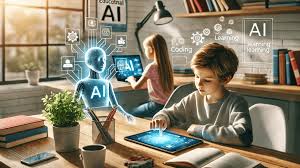
The era of artificial intelligence (AI) has changed almost every aspect of human life, and the world of education is one of the most profoundly affected sectors. In the past, education was synonymous with traditional classrooms, thick textbooks, and teachers standing in front of a blackboard. Today, AI delivers a personalized, adaptive, and much more efficient learning experience. Platforms like Duolingo, Khan Academy, and ChatGPT have proven that machines can be 24-hour personal tutors. In Indonesia, the government through the Ministry of Education and Culture has begun to integrate AI in the Merdeka Learning curriculum, while many private schools are already using AI-based learning systems to analyze student progress in real-time. This revolution is no longer the future, but an ongoing reality, where the boundaries between humans and technology in the learning process are increasingly blurred. Education in the AI era promises equal access to knowledge, but it also brings ethical and social challenges that must be addressed immediately so as not to leave some people left behind.

One of the most tangible impacts of AI in education is the personalization of learning. Each student has a different pace, style, and interest in learning. AI systems are able to analyze learning behavior data, identify weaknesses, and organize the right materials according to individual needs. For example, if a student is having trouble understanding algebraic math, the AI can provide additional exercises with visual explanations or interactive videos until the concept is mastered. At the college level, AI helps lecturers design dynamic curriculum and even grade student assignments with high accuracy. In Indonesia, AI pilot projects in several schools in Jakarta and Yogyakarta have shown an increase in learning outcomes of up to 30 percent in a short period of time. However, this personalization also raises concerns: are teachers still needed? The answer is yes, because AI has not been able to replace empathy, emotional motivation, and character formation that only human educators can do. Teachers in the AI era are transforming into facilitators and mentors, not just conveyors of information.

The biggest challenge for education in the AI era is the digital divide and human resource readiness. Not all regions in Indonesia have stable internet access or adequate technological devices. Students in remote areas often rely solely on conventional learning, while students in big cities already enjoy advanced AI features. In addition, many teachers have not been trained to use AI tools, so there is resistance and fear that their work will be replaced. The government needs to accelerate digital teacher training programs and provide equitable infrastructure. On the other hand, AI also has the potential to exacerbate inequality if only the wealthy can access premium paid platforms. Therefore, collaboration between the government, the private sector, and educational institutions is crucial to create an inclusive education ecosystem. Without this strategic step, AI could actually widen the gap between those who are rich in knowledge and those who are left behind.

In the midst of these challenges, the opportunities offered by AI are enormous. AI can democratize quality education by providing free courses from the world’s top universities through platforms like Coursera or edX. In Indonesia, initiatives such as Ruangguru and Zenius have combined AI to make learning more engaging through gamification and smart content recommendations. In addition, AI helps students with special needs, such as the blind or visually impaired, with customized text-to-speech and adaptive learning features. The future of education will also see the emergence of new majors such as “AI Ethics” and “Prompt Engineering” that prepare the younger generation for an increasingly automated world of work. Most importantly, AI encourages lifelong learning, where adults can continue to improve their skills without having to go back to formal schooling. Thus, AI is not a replacement for humans, but rather a tool that strengthens the potential of humans to learn faster and deeper.

Welcoming 2030 and beyond, education in the era of artificial intelligence must be designed with a wise vision. The right approach is human-centered AI, where technology supports, rather than dominates, the educational process. The Indonesian government needs to draft clear regulations on the use of AI in schools, including student data protection and plagiarism prevention. Teachers and parents must be taught AI literacy from an early age in order to guide children appropriately. Meanwhile, students need to be equipped with not only technical knowledge, but also 21st-century skills such as critical thinking, creativity, and ethics. Education in the AI era is ultimately not about who is the best at using technology, but rather how it helps create a generation that is more humane, adaptive, and ready to face global challenges. With the right steps, Indonesia can become one of the countries that successfully utilizes AI to educate the nation’s life, making education the main foundation towards a Golden Indonesia 2045.

#AI

#duolingo

merdekalearning

#ikahentihu


The Linguistic Wonders of Europe: 200 Languages That Unite and Separate the Blue Continent

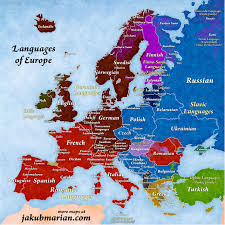
Europe is often referred to as the smallest continent in the world, but its linguistic richness is incredible. More than 200 languages and dialects live in the region, from the Atlantic Ocean to the Ural Mountains. European languages are not just a means of communication, but a reflection of the history of national migration, royal conquest, and cultural exchange over thousands of years. From the Latin that was the root of the Romance language to the Viking influences that shaped the Scandinavian language, Europe is a living linguistic laboratory. This diversity is increasingly felt in the European Union, which now has 24 official languages, plus dozens of protected minority languages. Each language carries a unique identity, from the soft Italian accent to the emphatic rhythm of German, creating a cultural mosaic that makes Europe so captivating. Even in today’s digital age, European languages are constantly evolving, adapting to technology while retaining their deep ancient roots.

The majority of European languages come from the Indo-European family, the world’s largest language family that covers about 90 percent of the continent’s population. This clump is divided into several main branches that are very different. Romance languages, of Latin descent, include French, Spanish, Italian, Portuguese, and Romanian; These languages are gentle and romantic, widely used in art, literature, and diplomacy. Meanwhile, the Germanic branch produced a more assertive and efficient English, German, Dutch, Swedish, and Danish languages, with a very strong global influence thanks to British colonialism and German economic power. The Slavic branch includes Russia, Poland, Czechoslovakia, Bulgaria, and Ukraine, which are rich in consonants and are often associated with epic literature as well as imperial history. There are also the almost extinct Celtic branches such as Ireland and Wales, as well as the Greek and Albanian languages that stand alone as single branches. This diversity shows how the migrations of ancient tribes such as the Aryans, Romans, and Slavs have shaped the complex and interconnected linguistic map of Europe.

Not all European languages are of Indo-European origin. Some of them are living proof that Europe was once home to older ethnic groups. Uralis, such as Finnish, Hungarian, and Estonian, are not at all related to Romance or Germanic; its origins are precisely from the Siberian region thousands of years ago. The Basque languages of Spain and France are isolated languages that have no close relatives, so linguists are still solving the mystery of its origins today. The Turkish language in European Turkey and some communities in the Balkans also adds color, while the Sami language in Northern Scandinavia reflects the life of indigenous peoples in the Arctic circle. These minority languages are often endangered due to the dominance of national languages, but revitalization programs in the European Union have managed to keep dozens of them alive, including Breton in France and Sorb in Germany. Their existence reminds us that Europe is not a monolithic continent, but rather a mosaic full of surprises.

The history of the evolution of European languages cannot be separated from major world events. The Roman conquest spread Latin throughout Western and Southern Europe, which later evolved into the modern Romance language. The invasion of the Germanic nations in the Middle Ages brought Germanic roots to Britain and Scandinavia, while the Ottoman Empire introduced Turkish elements to the Balkans. The Enlightenment and Industrial Revolution made French and English the languages of international diplomacy and science. In the 20th century, World War II and the Cold War affected the status of Russian and German languages, while globalization made English dominate business and the internet. Currently, the European Union actively promotes multilingualism through the Erasmus program and education policies that require students to learn at least two foreign languages. European languages also continue to be influenced by immigration and technology; Words like “selfie” or “hashtag” are now part of almost all languages on the continent.

In the midst of the challenges of globalization and artificial intelligence, European languages remain a vital cultural bridge. Language is not just a means of communication, but a living heritage that carries stories, values, and identities. The European Union is investing billions of euros in the preservation of minority languages, while translation and online learning apps are making European languages more accessible to younger generations around the world. Going forward, European languages will continue to evolve, perhaps with more borrowed words from Asia and Africa, but their rich roots will remain the foundation of the continent’s diversity. For travelers, students, or business people, understanding the European language means opening the door to the hearts of its people. Thus, the languages of Europe are not just words, but the soul of the continent that continues to sing in various rhythms, from Paris to Moscow, from Lisbon to Helsinki.

#europe

#europeanlanguages

#indo-europe

#ikahentihu


Learn Which One First, German or Dutch?

German and Dutch are two West Germanic languages that have significant similarities in vocabulary and grammatical structure, but also differences in pronunciation, grammatical complexity, and learning difficulties for native English or Indonesian speakers. This article explores the optimal learning sequence between the two, based on a literature review from current linguistic sources. The findings suggest that getting started with Dutch is easier because the grammar is simpler, although German offers broader benefits in economic and academic contexts. Recommendations are given for learners who want to master both, with an estimated shorter learning time if Dutch is learned first. This article aims to assist foreign language learners in making strategic decisions.

Language Learning, Linguistic Similarities, Language Difficulties.

In the era of globalization, learning foreign languages has become an essential skill for careers, education, and cultural interaction. German and Dutch, as part of the Germanic language family, are often an option for learners interested in Central and Western Europe. German is the official language in Germany, Austria, and Switzerland, with over 100 million native speakers, while Dutch is spoken in the Netherlands and Belgium, with about 24 million speakers. The main question for learners is: which one should be studied first? This article discusses the comparison of the two languages in terms of similarities, differences, and benefits of learning sequences. Based on the perspective of English learners (who have similarities to both), we suggest an approach that maximizes efficiency. This research is relevant for Indonesian learners, considering that the Indonesian language has Dutch influence from the colonial period, which can facilitate access to the Netherlands.

The German and Dutch Literature Review come from the same root, which is the West Germanic language, so it has a similarity of up to 80% in basic vocabulary.

For example, the word “house” in English is similar to “Haus” (German) and “huis” (Dutch). However, the main difference lies in the pronunciation: the Dutch have a rough guttural “g” sound, while the German focuses more on the sharp “s”.

German grammar is more complex with four cases (nominative, accusative, dative, genitive) and three genders (masculine, feminine, neutral), while the Netherlands has only two genders and does not use a complicated case system. Studies show that for English speakers, Dutch is easier to learn due to grammatical simplicity, with an estimated time of 600 hours to reach B2 level, compared to 900 hours for German.

The benefits of learning one language before another include knowledge transfer: mastering Dutch first makes it easier for German due to the similarity of vocabulary, while conversely it may be more challenging because the complexity of German can frustrate learners.

The literature also highlights that learning Germanic languages improves cognitive abilities and facilitates other languages such as Swedish or Norwegian.

Data was collected from web searches with keywords such as “similarities between German and Dutch”, “which is easier German or Dutch”, and “benefits of learning Germanic languages”. Sources are selected from trusted sites such as Reddit, Quora, YouTube, and linguistic blogs, with a focus on publications between 2018-2026. A total of 20 sources were analyzed qualitatively, grouped into themes: similarities/differences, difficulties, and learning sequences. The analysis was conducted by comparing expert opinion and empirical data, such as time estimates from the U.S. State Department.

Results and Discussion

The results of the review showed significant similarities: the two languages have similar sentence structures, with the second verb often placed at the end in subordinate sentences. However, German is more difficult due to its case system, which requires changing the form of nouns based on sentence functions. For English learners, Dutch is considered 50% faster to master due to the lack of cases and the influence of stronger English vocabulary. Discussion of the sequence: Starting with the Netherlands provides an easier foundation, allowing transfers to Germany with high efficiency. Conversely, learning German first can make the Netherlands feel simple, but the risk of fatigue is greater.

The economic benefits of German (as the third largest language in the world) make it a priority for careers, while Dutch is useful for businesses in Northern Europe. In Indonesia, Dutch historical influences (such as borrowed words such as “office” from “kantoor”) made it easier for the Netherlands as a first step.

Cognitively, sequential learning improves memory and multitasking skills.

Comparison Table:

Aspects German Dutch Recommendations for Learners
Grammar Complex (4 cases, 3 genders) Medium (2 genders, no cases) The Netherlands is easier to start
Pronunciation Sharp, focus on the ‘s’ Rough, guttural ‘g’ Train the Dutch first to adapt
Study Time 900 hours for B2 600 hours for B2 Start Dutch for efficiency
Benefits Economics, academic European business, culture Germany for a long-term career

Conclusion

Based on the analysis, it is recommended to learn Dutch first because of its simplicity, which makes the transition to German easier. This optimizes time and reduces frustration, especially for beginners. However, if the main goal is a career in Germany, the German priority is more appropriate. Future research may explore this sequence in non-English learners, such as Indonesian speakers. Learning Germanic languages not only opens up global opportunities but also enriches cultural understanding.

#dutch

#german

#germany

#ikahentihu

The Impact of Artificial Intelligence on Education

The Impact of Artificial Intelligence on Education in the Digital Age

Artificial Intelligence (AI) has revolutionized various sectors, including education. This article discusses the impact of AI on the teaching and learning process, from the personalization of learning to the ethical challenges that arise. Based on an analysis of the current literature, AI can improve educational accessibility, but it also has the potential to weaken students’ critical skills if not managed properly. Findings show that intelligent AI integration can improve educational efficiency by up to 30-40% in developing countries such as Indonesia.Keywords: Artificial Intelligence, Digital Education, Learning Personalization, AI Ethics.

In today’s digital era, education is facing a major transformation due to technological advancements, especially Artificial Intelligence (AI). AI, defined as the ability of machines to mimic human intelligence such as learning and decision-making (Russell & Norvig, 2020), has become a key tool in improving the quality of education. In Indonesia, where access to education is still a challenge in rural areas, AI offers innovative solutions such as adaptive e-learning platforms. This article aims to explore the positive and negative impacts of AI on education, with a focus on global and local contexts. The approach used is a literature review from the latest scientific sources, including journals such as the Journal of Educational Technology and reports from UNESCO. Literature Review AI has been applied in education through various forms, such as Intelligent Tutoring Systems (ITS) and learning data analysis. According to Baker (2019), ITS can adjust subject matter based on students’ abilities, thereby increasing knowledge retention by up to 25%. For example, platforms like Duolingo or Khan Academy use machine learning algorithms for personalization. On the other hand, challenges arise in the form of algorithmic bias. Research by Buolamwini and Gebru (2018) shows that AI is often discriminatory against minority groups, which can exacerbate educational inequalities. In Indonesia, a survey by the Ministry of Education and Culture (2022) indicates that only 60% of teachers are ready to integrate AI, so further training is needed.

This article uses a systematic literature review method. Data was collected from databases such as Google Scholar, PubMed, and JSTOR with the keywords “AI in education” and “impact of AI on learning”. Inclusion criteria include publications between 2018-2026, a focus on primary to higher education, and relevance to the digital context. A total of 25 articles were selected after an initial screening from 150 sources. The analysis was carried out qualitatively, with the grouping of main themes: positive, negative, and recommendation impacts.

Results and Discussion

The results show that AI has a major positive impact in three aspects: Learning Personalization: AI can analyze student data in real-time, so teachers can focus on students who need extra help. A study by Siemens (2013) found an increase in student achievement by 15-20% through learning analytics.

Accessibility: In developing countries, AI enables distance education through chatbots and mobile apps. For example, during the COVID-19 pandemic, the use of AI in Indonesia increased by 200% (Bappenas, 2021).

Administrative Efficiency: AI automates assessment and administration, saving teachers up to 40% of their time (McKinsey Global Institute, 2019).

However, the negative impact cannot be ignored: Loss of Human Interaction: Reliance on AI has the potential to reduce students’ social skills (Turkle, 2017).

Ethical Issues: The privacy of student data is an issue, with the risk of breaches such as the one in the Cambridge Analytica case.

Digital Inequality: In Indonesia, only 70% of the population has stable internet access (BPS, 2023), so AI can widen the gap.

This discussion emphasized the need for regulations, such as the AI ethics guidelines from UNESCO (2021), to maximize benefits while minimizing risks.

Conclusion

AI has great potential to revolutionize education, but its implementation must be accompanied by a holistic approach that considers ethical and inclusive aspects. In Indonesia, the government is advised to improve digital infrastructure and teacher training. Future research could focus on the long-term evaluation of the impact of AI in rural schools. BibliographyBaker, R. S. (2019). Challenges for the Future of Educational Data Mining. Journal of Educational Data Mining.

#AI

#ikahentihu