
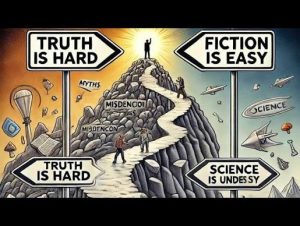
Scientifically, if a study is true and strong, it should be relatively easy to test or verify it. Science works on very simple but stubborn principles. Claims must be testable, retestable, and anyone using the same method will arrive at similar results. Replication is key.
If someone’s research states something factual, there are several lines of proof that usually occur.
First, the data can be checked by others. The dataset is opened, the method is described, the analysis steps are transparent. Skeptics are actually happy with this kind of situation because they can try to refute it.
Second, the results can be replicated. Other researchers tried the same procedure. If the results are consistent, trust increases. Otherwise, the claims start to collapse.
Third, the argument must be stronger than the alternative explanation. In science there is a simple principle that is often used. The simplest explanations that fit the data are usually more likely to be true. Occam’s razor is his name.
In the real world, the problem is rarely purely scientific. There is psychology, identity, reputation, and even politics. People can remain distrustful even if the data is available. This phenomenon is known in cognitive psychology as confirmation bias. The human brain tends to like information that corroborates initial beliefs.
The history of science is full of strange examples like this. Alfred Wegener had already proposed the theory of continental shifts in 1912. The geological evidence is actually quite strong. Many scientists laughed at it for decades. It wasn’t until the 1960s that evidence of the ocean floor emerged that the theory was accepted as plate tectonics.
This means this. Scientific truth does not always win out in public debate. He wins slowly through the accumulation of evidence and the ability of others to verify.
If the research is methodologically correct, the most powerful path is not convincing a particular individual. The most powerful path is to open up the methods, open up the data, and then let the research community test it. If it escapes a lot of criticism, rational skeptics will usually change positions because the evidence is starting to be too heavy to ignore.
Science has interesting habits. He doesn’t care who is right. He only cares about what can be proved. That’s where the power lies as well as the drama.
#science
#alfredwegener
#ikafarihahhentihu