The Influence of English on Regional Languages in Indonesia

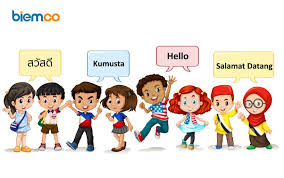
English as a global lingua franca has had a very significant influence on Indonesia’s linguistic landscape, especially in hundreds of regional languages. Since the era of globalization and information technology advancements, English has spread through education, mass media, entertainment, business, and social media. Indonesia, with more than 700 regional languages, faces a complex dynamic where the national language (Bahasa Indonesia) and English together dominate the public sphere, while regional languages are increasingly pushed into the domestic and informal spheres. This phenomenon reflects the language shift triggered by socio-economic factors, urbanization, and the perception that English is a symbol of modernity and social mobility. While this influence brings benefits in the form of vocabulary enrichment, it also raises serious concerns about the preservation of local cultural identity.

One of the most visible forms of influence is vocabulary borrowing and code-mixing. Young people in various regions often insert English words into regional language conversations, such as “status update”, “meeting tomorrow”, “chill first”, or “the vibe is good”. In Java, expressions such as “very happy” or “sorry ya” are often mixed with krama or ngoko. In West Sumatra, Minangkabau speakers adopt technological terms such as “download”, “upload”, and “gadget”. This code-switching phenomenon is increasingly intense on social media such as Instagram and TikTok, where Sundanese, Batak, or Bugis youth switch between regional languages, Indonesian, and English in one sentence. This process enriches expression but slowly erodes the original vocabulary of the regional language, especially in the younger generation who are more fluent in English than their mother tongue.

The most worrying negative impact is the threat of extinction of regional languages. According to data from the Language Agency, hundreds of regional languages in Indonesia are classified as vulnerable or critical. The dominance of the Indonesian language in education and government, coupled with the prestige of English in urban circles, led to a drastic decline in active speakers of regional languages. In many families, parents encourage children to master English for the sake of the future, while the local language is only spoken occasionally with grandparents. As a result, there is an intergenerational gap where children no longer inherit the ancestral language in full. Research shows that in big cities, regional languages are increasingly limited to family domains and cultural rituals, while the economic, technological, and entertainment domains are dominated by the British and Indonesian. This threatens not only linguistic diversity but also local knowledge, oral literature, and the cultural values contained in it.

On the other hand, the influence of English also brings positive aspects in the form of enrichment and adaptation. Many regional languages create new words or adapt English terms with local phonology, thus remaining relevant to the times. For example, modern concepts such as technology, business, and psychology can be expressed more precisely through word loans. Bilingualism and multilingualism involving regional languages, Indonesian, and English have been proven to increase the cognitive flexibility of the younger generation. Some communities also use this influence for revitalization, such as creating YouTube content or regional songs with English elements to make them more attractive to generation Z. Thus, regional languages are not static but continue to evolve, although they must still be maintained in balance so as not to lose their identity.

Overall, the influence of English on regional languages in Indonesia is a two-sided phenomenon that reflects the tension between globalization and cultural preservation. Without systematic efforts such as regional-based bilingual education, digital documentation, and public awareness campaigns, many regional languages are at risk of extinction in the next few generations. Governments, academics, and communities need to collaborate to strengthen the position of regional languages through local curriculum, creative media, and linguistic research. Language is not only a means of communication, but a carrier of ancestral identity, knowledge, and heritage. Maintaining a balance between mastering English as a global capital and preserving regional languages as cultural roots is both a challenge and a shared responsibility to maintain Indonesia’s linguistic richness in the digital era.

#english

#language

#indonesian

#ikahentihu

Language and Cultural Identity: How Does Language Shape the Human Way of Thinking?

Language is one of the most fundamental elements in human life, not only as a means of communication but also as a shaping of cultural identity and cognition. The Sapir-Whorf hypothesis or the theory of linguistic relativity, put forward by Edward Sapir and Benjamin Lee Whorf in the early 20th century, became the main foundation of this discussion. This theory states that the structure and vocabulary of the language a person uses influences the way he or she understands, categorizes, and interacts with reality. The strong version (linguistic determinism) claims that language determines the mind completely, while the weak version (linguistic relativity) is more scientifically accepted, that is, language influences or shapes perception without completely restricting it. In the context of cultural identity, language functions as a mirror as well as a shaping of values, norms, and the collective mindset of a society. The evolution of languages influenced by history, migration, and intercultural contacts further enriches the diversity of human ways of thinking around the world.

One of the strongest evidences of linguistic relativity is seen in the color category. Russian speakers distinguish “siniy” (dark blue) and “goluboy” (light blue) as two separate colors, so they are quicker to distinguish shades of blue in visual perception experiments than English speakers who use only one word “blue”. Similarly, some languages such as the Himba language in Namibia do not distinctly distinguish between blue and green, which affects the speed and accuracy of color recognition. This example shows that linguistic boundaries affect the brain’s cognitive processing. In addition, languages with grammatical gender systems such as German or Spanish make their speakers more likely to associate masculine or feminine traits on inanimate objects according to the gender of the word, affecting the description and emotional perception of the object. Modern neurocognitive research using EEG and fMRI is increasingly supporting that language can “shape” brain activity in perception processing.

In the spatial and time dimensions, the influence of language on the way of thinking is becoming clearer. The Guugu Yimithirr language in Australia uses absolute cardinal directions (north, south, east, west) instead of relative (left, right), so speakers have a very sharp spatial orientation and almost always know the cardinal direction. The Hopi language Whorf researched does not have a strict tense of time like English, so the concept of time is more cyclical and manifestation than linear. Speakers of a vertically time-oriented language (such as Chinese) tend to describe the future at the “bottom” and the past at the “top,” in contrast to English speakers who see time flowing horizontally from left to right. This proves that language not only describes reality, but also helps shape the mental framework that humans use to navigate the world. Cultural identity is also formed through these linguistic patterns, strengthening the sense of togetherness and uniqueness of the group.

Language also shapes cultural identity through emotional vocabulary, kinship relationships, and social values. Some languages in Papua New Guinea have dozens of words for very specific types of family relationships, which affect the way individuals view social responsibility. In collectivist societies such as Japan, the intricate use of honorifics (keigo) reinforces hierarchical awareness and group harmony. In contrast, more egalitarian languages such as modern English tend to encourage an individualist mindset. Contemporary studies show that bilingualism or multilingualism allows a person to “switch” their mindset according to the language used, known as cognitive flexibility. However, globalization and the dominance of English also threaten the extinction of regional languages, which means the loss of unique ways of thinking and certain cultural identities. Language preservation is a crucial issue in maintaining the cognitive diversity of mankind.

Overall, language and cultural identity are profoundly intertwined in shaping the way people think. Although not completely determining, language acts as a lens through which we filter and color our experience of the world. In today’s digital and multicultural era, understanding linguistic relativity is becoming increasingly important for education, psychology, diplomacy, and artificial intelligence. Language is not just a tool, but the foundation of humanity’s identity and intellectual property. By respecting the diversity of languages, we also appreciate the diversity of ways of thinking that enrich civilization. Understanding these relationships opens the door to more empathetic cross-cultural communication and cognitive innovation in the future.

#language

#culturalidentity

#ikahentihu

The Evolution of French in France, Canada, and Africa

French is one of the most important Romance languages in the world with its roots in Vulgar Latin brought by Roman troops to the territory of Gaul (present-day France) in the early centuries AD. Its evolution began from Old French (langues d’oïl) to reaching a modern standard form through the process of standardization in France in the 17th and 18th centuries, most notably through the Académie Française founded in 1635. The global spread of this language occurred through French colonialism beginning in the 17th century, which brought the French language to North America (Canada) and then to Africa in the 19th century. Today, more than 300 million people speak French, with the majority of speakers being outside of European French. Developments in three major regions—France, Canada (especially Quebec), and Africa—show divergences influenced by geographical isolation, contact with local languages, and different socio-political dynamics. Although still a single language, these variants reflect rich cultural adaptations.

In France as the center of origin, the French language has evolved towards a highly codified form of standard. Pronunciation tends to be nasal and clear front vowels, with an emphasis on clarity and elisi (sound removal). The vocabulary was heavily influenced by classical Latin, Italian, and more recently English despite attempts at purification through the Toubon laws. Formal grammar is highly regarded, especially in official writing and media. However, at the regional level there are still dialect variations such as in Provence or Alsace. Modern evolution in France was more influenced by globalization, immigration, and technology, which made the language more dynamic while maintaining its image as a world-class language of diplomacy and literature. The Paris Standard has become a prestigious reference for many francophone countries.

In Canada, particularly Quebec, the French language has developed differently since the founding of Nouvelle-France in the 17th century. The Québécois variant retains many of the characteristics of Old and Medieval France that had been lost in post-Revolution France. The pronunciation is more “soft” with vowel diphthongization (e.g. “moi” becomes similar to “moé”, “toi” becomes “toé”), as well as a more posterior “r”. The vocabulary has largely adopted unique terms such as dépanneur (grocery store), magasiner (shopping), fin de semaine (weekend), and strong influences from English as well as Amerindian. Grammar is somewhat simpler in everyday conversation, with a wider use of “tu”. The Quiet Revolution (Révolution tranquille) in the 1960s strengthened Quebec’s linguistic identity through legislation protecting the French language from British domination. As a result, Québécois sounds very different to European French speakers, sometimes requiring ear adjustments.

In Africa, French has had the most dynamic and rapid evolution as it serves as the lingua franca in more than 20 former colonized countries. In countries such as Senegal, Côte d’Ivoire, Cameroon, or the Democratic Republic of the Congo, African French (le français africain) is heavily influenced by local languages (Wolof, Dioula, Lingala, etc.), resulting in regional variants with more rhythmic accents, strong intonation, and grammatical simplifications. New vocabulary emerged such as enjailler (partying), griller (failing), or creative phrases that reflected the urban reality of Africa. In many places, French is not the primary mother tongue but rather a second language or education, resulting in an intense pidgin-like or code-switching form. The number of French speakers in Africa now exceeds that of Europe and is projected to dominate the francophonie by 2050. This evolution created a wealth of new expressions, although it sometimes gave rise to debates about the “purity” of language.

Overall, the evolution of the French language shows how language can adapt to new environments without losing its core identity. The differences between the variants—phonological, lexical, and pragmatic—reflect colonial history, cultural resistance, and the creativity of the speakers. In the era of globalization, media, music (such as French Afrobeats or Quebec songs), and migration have further enriched the interactions between these variants. French is no longer a mere French, but a plural global language. Understanding its evolution helps us appreciate linguistic diversity and the importance of preservation in the midst of English dominance. For students, translators, and diplomats, awareness of regional variants is the key to effective communication in the increasingly wide francophone world.

#french

#canada

#africa

#ikahentihu