Language and Cultural Identity: How Does Language Shape the Human Way of Thinking?

Language is one of the most fundamental elements in human life, not only as a means of communication but also as a shaping of cultural identity and cognition. The Sapir-Whorf hypothesis or the theory of linguistic relativity, put forward by Edward Sapir and Benjamin Lee Whorf in the early 20th century, became the main foundation of this discussion. This theory states that the structure and vocabulary of the language a person uses influences the way he or she understands, categorizes, and interacts with reality. The strong version (linguistic determinism) claims that language determines the mind completely, while the weak version (linguistic relativity) is more scientifically accepted, that is, language influences or shapes perception without completely restricting it. In the context of cultural identity, language functions as a mirror as well as a shaping of values, norms, and the collective mindset of a society. The evolution of languages influenced by history, migration, and intercultural contacts further enriches the diversity of human ways of thinking around the world.

One of the strongest evidences of linguistic relativity is seen in the color category. Russian speakers distinguish “siniy” (dark blue) and “goluboy” (light blue) as two separate colors, so they are quicker to distinguish shades of blue in visual perception experiments than English speakers who use only one word “blue”. Similarly, some languages such as the Himba language in Namibia do not distinctly distinguish between blue and green, which affects the speed and accuracy of color recognition. This example shows that linguistic boundaries affect the brain’s cognitive processing. In addition, languages with grammatical gender systems such as German or Spanish make their speakers more likely to associate masculine or feminine traits on inanimate objects according to the gender of the word, affecting the description and emotional perception of the object. Modern neurocognitive research using EEG and fMRI is increasingly supporting that language can “shape” brain activity in perception processing.

In the spatial and time dimensions, the influence of language on the way of thinking is becoming clearer. The Guugu Yimithirr language in Australia uses absolute cardinal directions (north, south, east, west) instead of relative (left, right), so speakers have a very sharp spatial orientation and almost always know the cardinal direction. The Hopi language Whorf researched does not have a strict tense of time like English, so the concept of time is more cyclical and manifestation than linear. Speakers of a vertically time-oriented language (such as Chinese) tend to describe the future at the “bottom” and the past at the “top,” in contrast to English speakers who see time flowing horizontally from left to right. This proves that language not only describes reality, but also helps shape the mental framework that humans use to navigate the world. Cultural identity is also formed through these linguistic patterns, strengthening the sense of togetherness and uniqueness of the group.

Language also shapes cultural identity through emotional vocabulary, kinship relationships, and social values. Some languages in Papua New Guinea have dozens of words for very specific types of family relationships, which affect the way individuals view social responsibility. In collectivist societies such as Japan, the intricate use of honorifics (keigo) reinforces hierarchical awareness and group harmony. In contrast, more egalitarian languages such as modern English tend to encourage an individualist mindset. Contemporary studies show that bilingualism or multilingualism allows a person to “switch” their mindset according to the language used, known as cognitive flexibility. However, globalization and the dominance of English also threaten the extinction of regional languages, which means the loss of unique ways of thinking and certain cultural identities. Language preservation is a crucial issue in maintaining the cognitive diversity of mankind.

Overall, language and cultural identity are profoundly intertwined in shaping the way people think. Although not completely determining, language acts as a lens through which we filter and color our experience of the world. In today’s digital and multicultural era, understanding linguistic relativity is becoming increasingly important for education, psychology, diplomacy, and artificial intelligence. Language is not just a tool, but the foundation of humanity’s identity and intellectual property. By respecting the diversity of languages, we also appreciate the diversity of ways of thinking that enrich civilization. Understanding these relationships opens the door to more empathetic cross-cultural communication and cognitive innovation in the future.

#language

#culturalidentity

#ikahentihu

Arabic: One Written Language, Many Different Spoken Variants

Arabic is one of the oldest and most influential languages in the world, with more than 400 million native speakers and status as the liturgical language of Muslims. The most typical phenomenon in Arabic is diglossia, which is the strict separation between standard written language (Modern Standard Arabic/MSA or Fusha) and various oral variants (Ammiya or dialect) used in everyday life. Although all variants are rooted in Classical Arabic (including the language of the Quran), historical, geographical, and cultural contacts have created a very significant linguistic diversity. From a sociolinguistic perspective, this situation is unique in that one relatively homogeneous written language is spoken throughout the Arab world, while its oral variants can differ phonologically, lexically, and grammatically to the extent that they are difficult to understand each other. The standard written Arabic language (Fusha) serves as a “high language” used in official documents, written media, literature, formal television news, political speech, and education. The grammar is relatively stable, with a complex morphological system (root-and-pattern system), grammatical cases (i’rab), and a rich and consistent vocabulary throughout the Arab world. Modern fusha is the result of the modernization of the Classical Arabic language since the 19th century (Nahda era). Due to the influence of Islam, Fusha remains a symbol of the identity and unity of Arabs and global Muslims. However, it is rarely used in everyday conversation, so many non-native learners are proficient in reading and writing but have difficulty speaking native speakers.

The Arabic spoken variants are very diverse and are usually divided into several large groups: Egyptian, Levantine (Syria, Lebanon, Palestine, Jordan), Gulf (Persian Gulf), Maghrebi (Morocco, Algeria, Tunisia), and Iraq. The Egyptian dialect is most popular and easy to understand due to the dominance of the Egyptian film and music industry in the Arab world. The Levantine dialect is known for being flexible and “soft”, while the Maghrebi dialect is heavily influenced by Berber and French so it is often difficult for Middle Eastern speakers to understand. Notable differences are found in pronunciation (e.g. the letter qaf which can be read as /q/, /g/, /ʔ/, or even omitted), the use of pronouns, verb forms, and everyday vocabulary. For example, the word “car” can be called sayyara (Fusha), ʿarabiyya (Egypt), sayyara or steel (some Gulf countries), and tomobil or karrosa in Maghreb.

This phenomenon of diglossia brings both challenges and benefits. On the one hand, Arab children have to learn two different language systems: the mother dialect for the home and the MSA for school. This often leads to literacy difficulties and a gap between spoken and written language. On the other hand, the diversity of dialects enriches local cultural expressions, folk poetry (zajal), songs, and humor. Social media and drama have increased exposure between dialects, making young speakers increasingly able to understand other variants. Contemporary linguistic research shows that cross-dialect comprehension is increasing thanks to satellites, YouTube, and migration. However, in the context of business, diplomacy, and higher education, mastery of Fusha remains the main requirement.

In conclusion, Arabic offers a unique model in world linguistics: a strong writing unit in the midst of tremendous linguistic diversity. This diversity is not a division, but a reflection of the rich history and culture of Arab peoples from the Atlantic Ocean to the Persian Gulf. For Arabic language learners, the best approach is to master Fusha as a foundation while choosing one spoken dialect for the purpose (Egyptian for media, Levantine for general communication, or Maghrebi for North Africa). In the era of globalization, the ability to switch between Fusha and dialects is a valuable competency that improves cross-cultural understanding and communication effectiveness. Arabic remains alive and adaptive, proving that the unity of writing can go harmoniously with linguistic plurality.

#ammiya

#fusha

#arabiclanguage

#ikahentihu

The World’s Most Difficult Languages to Learn and the Reasons Behind It

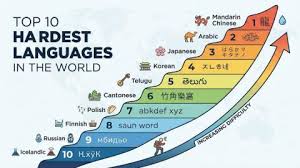
According to the Foreign Service Institute (FSI) of the United States, the most difficult languages for English speakers fall into Category IV or “super-hard languages”, namely Mandarin, Arabic, Japanese, and Korean, which require about 2,200 hours of lessons to achieve professional proficiency. Chinese is often ranked at the top because of its tone system consisting of four main tones plus neutral tones, where incorrect pronunciation can change the meaning of the word completely—for example, “ma” can mean mother, horse, bile, or bruise depending on the intonation. In addition, the logographic Hanzi writing system requires learners to memorize thousands of characters, each with a different meaning and often pronunciation. This complexity is exacerbated by the lack of similarity of vocabulary with Indo-European languages, so learners must build a foundation from scratch without the help of cognates. Cultural factors and the context of use also add to the challenge, as understanding Chinese involves not only grammar but also subtle social norms. Linguistic research shows that the brains of non-native learners must develop new abilities in auditory and visual processing that are much different from alphabetic languages.

Arabic follows as one of the most challenging due to its writing system based on the consonant alphabet, where vowels are often unwritten and must be guessed out of context. The language has a unique root system, where three basic consonants can produce dozens of derived words with related meanings, but require a deep understanding of morphological patterns. The extreme variety of dialects between countries—from Modern Standard Arabic (MSA) used in the media to everyday dialects such as Egyptian or Levantine—means that students have to master two variants at the same time. Pronouncing letters such as ‘ayn, ghayn, and qaf is difficult for Indonesian or English speakers because it involves throat sounds that are rarely present in their native language. In addition, the direction of writing from right to left and grammatical rules involving gender, numbers, and cases add to the cognitive load. Studies show that learners take longer to achieve reading and listening fluency due to the deep literary and rhetorical richness in the Arabic tradition.

Japanese and Korean are also among the most difficult groups due to their unique combination of writing systems and grammatical structures. Japan uses three writing systems at once: Hiragana, Katakana, and Kanji (thousands of characters adopted from Hanzi but with different pronunciations and meanings). Japanese grammar is agglutinative with particles indicating word functions, as well as complex levels of subtlety (honorifics) based on social hierarchy. Meanwhile, Korean has Hangul that is phonetic and relatively easy to learn, but its grammar is highly context-dependent, a more complex honorific system, and flexible word order. These two languages have little in common with Austronesian or Indo-European languages, so there is almost no transfer of linguistic skills. Psychological factors such as motivation and exposure to pop culture (anime, K-dramas) can help, but cognitive research confirms that processing Korean kanji or sentence patterns requires significant neural adaptation. Languages such as Hungarian, Finnish, and Basque are also often said to be difficult due to their extreme agglutinative grammar and non-Indo-European vocabulary, although they have fewer speakers.

Overall, language learning difficulties are determined not only by linguistic distance but also by neuropsychological, cultural, and environmental factors. Technological advancements such as AI-based applications, virtual reality immersion, and evidence-based teaching methods have reduced the time required, but they have not eliminated fundamental challenges. For Indonesian speakers, the difficulty can be slightly reduced in certain phonetic aspects, but still high in the writing and tone systems. Understanding the reasons behind these difficulties not only helps prospective learners prepare the right strategies—such as focusing on tone first for Mandarin or dialect hearing practice for Arabic—but also provides a deeper appreciation of the diversity of human languages as a reflection of the complexity of the mind and culture. With dedication and the right approach, even the most difficult language can be mastered, opening the door to a wider global understanding.

#language

#hardestlanguage

#ikahentihu

English as a Global Language: A Blessing or a Threat to Local Languages?

English has become the most dominant global language in the modern era. With approximately 1.5 billion speakers worldwide—comprising 380 million native speakers and more than 1.1 billion second speakers—it serves as the lingua franca in business, education, science, technology, and international diplomacy. In Indonesia, English proficiency is key to accessing job opportunities in multinational companies, pursuing studies abroad, and participating in global trade such as the ASEAN Economic Community. Its existence brings blessings in the form of wide access to information, as more than 50% of scientific journals and most of the internet content are in English. This allows Indonesia’s young generation to connect with the latest knowledge and world culture without borders. However, behind these benefits, there are concerns that the dominance of English is actually a threat to the diversity of local languages. As a country with more than 700 regional languages, Indonesia faces a real risk where the mother tongue is increasingly being sidelined in favor of a global “successful language”.

On the one hand, English brings an undeniable blessing to the progress of individuals and nations. In the field of economics, mastery of this language opens the door to better careers, increases the competitiveness of the workforce, and facilitates the promotion of local products to the international market. In the education sector, Indonesian students and researchers can easily access global literature, collaborate with foreign scientists, and attend international conferences without language barriers. Even in everyday life, the influence of English enriches the vocabulary of the Indonesian language through the absorption of words such as “computer”, “internet”, or “meeting”, which accelerates adaptation to technological advances. Many urban parents encourage their children to learn English early so as not to be left behind in the era of globalization. This phenomenon creates greater opportunities for social mobility, where English language proficiency is often considered a symbol of prestige and modernity. Overall, these blessings help Indonesia integrate more deeply into the global community, foster economic growth, and enhance intercultural understanding.

However, on the other hand, the dominance of English also carries a serious threat to local languages and cultural identities. In Indonesia, more than 425 regional languages are endangered, with dozens already in critical status or completely extinct. The younger generation in big cities tends to switch to Indonesian and English in daily conversations, social media, and education, so that the transmission of regional languages between generations is interrupted. The phenomenon of code-mixing between English and Indonesia is increasingly prevalent in public spaces, advertising, and digital content, which is slowly eroding the purity and vitality of the local language. Regional languages rich in local wisdom—such as vocabulary about nature, traditional medicine, or philosophical values—are at risk of being lost along with ancestral knowledge. This threat is not only linguistic, but also cultural: young people who have lost their mother tongue often experience identity crises and are cut off from their community roots. At the global level, UNESCO notes that about 40% of the world’s languages are endangered, largely due to pressure from dominant languages such as English.

The main factors that exacerbate this threat are globalization, urbanization, and the influence of digital media. International schools and bilingual programs often prioritize English, while regional languages rarely find space in the curriculum. Social media and streaming platforms, which are predominantly English-speaking, make young people more interested in global content than oral stories or regional songs. In addition, the social perception that English is more “prestigious” and that regional languages are considered “villages” further accelerate the language shift. In Indonesia, the use of English terms in the names of tourist attractions, office buildings, or public campaigns is becoming more common, which indirectly places the local language in a subordinate position. Without collective awareness, this process can lead to cultural homogenization, where the diversity of worldviews brought by hundreds of regional languages vanishes, leaving behind a more monotonous and less innovative world.

Nonetheless, English doesn’t have to be the enemy of the local language; The two can coexist through a wise approach. The solution is to implement a balanced multilingual education, where the mother tongue remains the foundation at the elementary level, while English is taught as an additional tool. The government can encourage revitalization through regional language festivals, digital content in local languages, as well as incentives for communities to document and teach their ancestral languages. In Indonesia, the Language Agency and the Merdeka Belajar program can be expanded to integrate regional languages in the local curriculum. People also need to build pride in their mother tongue without denying the benefits of English. Thus, we can reap the blessings of globalization without losing our cultural heritage. English as a global language does bring progress, but it will only be a true blessing if we are able to keep it from becoming a threat to the diversity of local languages. Let us protect all languages as part of the wealth of the nation and humanity.

#english

#globallanguage

#englishlanguage

#ikahentihu

The Linguistic Wonders of Europe: 200 Languages That Unite and Separate the Blue Continent

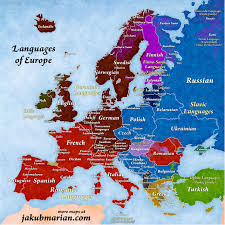
Europe is often referred to as the smallest continent in the world, but its linguistic richness is incredible. More than 200 languages and dialects live in the region, from the Atlantic Ocean to the Ural Mountains. European languages are not just a means of communication, but a reflection of the history of national migration, royal conquest, and cultural exchange over thousands of years. From the Latin that was the root of the Romance language to the Viking influences that shaped the Scandinavian language, Europe is a living linguistic laboratory. This diversity is increasingly felt in the European Union, which now has 24 official languages, plus dozens of protected minority languages. Each language carries a unique identity, from the soft Italian accent to the emphatic rhythm of German, creating a cultural mosaic that makes Europe so captivating. Even in today’s digital age, European languages are constantly evolving, adapting to technology while retaining their deep ancient roots.

The majority of European languages come from the Indo-European family, the world’s largest language family that covers about 90 percent of the continent’s population. This clump is divided into several main branches that are very different. Romance languages, of Latin descent, include French, Spanish, Italian, Portuguese, and Romanian; These languages are gentle and romantic, widely used in art, literature, and diplomacy. Meanwhile, the Germanic branch produced a more assertive and efficient English, German, Dutch, Swedish, and Danish languages, with a very strong global influence thanks to British colonialism and German economic power. The Slavic branch includes Russia, Poland, Czechoslovakia, Bulgaria, and Ukraine, which are rich in consonants and are often associated with epic literature as well as imperial history. There are also the almost extinct Celtic branches such as Ireland and Wales, as well as the Greek and Albanian languages that stand alone as single branches. This diversity shows how the migrations of ancient tribes such as the Aryans, Romans, and Slavs have shaped the complex and interconnected linguistic map of Europe.

Not all European languages are of Indo-European origin. Some of them are living proof that Europe was once home to older ethnic groups. Uralis, such as Finnish, Hungarian, and Estonian, are not at all related to Romance or Germanic; its origins are precisely from the Siberian region thousands of years ago. The Basque languages of Spain and France are isolated languages that have no close relatives, so linguists are still solving the mystery of its origins today. The Turkish language in European Turkey and some communities in the Balkans also adds color, while the Sami language in Northern Scandinavia reflects the life of indigenous peoples in the Arctic circle. These minority languages are often endangered due to the dominance of national languages, but revitalization programs in the European Union have managed to keep dozens of them alive, including Breton in France and Sorb in Germany. Their existence reminds us that Europe is not a monolithic continent, but rather a mosaic full of surprises.

The history of the evolution of European languages cannot be separated from major world events. The Roman conquest spread Latin throughout Western and Southern Europe, which later evolved into the modern Romance language. The invasion of the Germanic nations in the Middle Ages brought Germanic roots to Britain and Scandinavia, while the Ottoman Empire introduced Turkish elements to the Balkans. The Enlightenment and Industrial Revolution made French and English the languages of international diplomacy and science. In the 20th century, World War II and the Cold War affected the status of Russian and German languages, while globalization made English dominate business and the internet. Currently, the European Union actively promotes multilingualism through the Erasmus program and education policies that require students to learn at least two foreign languages. European languages also continue to be influenced by immigration and technology; Words like “selfie” or “hashtag” are now part of almost all languages on the continent.

In the midst of the challenges of globalization and artificial intelligence, European languages remain a vital cultural bridge. Language is not just a means of communication, but a living heritage that carries stories, values, and identities. The European Union is investing billions of euros in the preservation of minority languages, while translation and online learning apps are making European languages more accessible to younger generations around the world. Going forward, European languages will continue to evolve, perhaps with more borrowed words from Asia and Africa, but their rich roots will remain the foundation of the continent’s diversity. For travelers, students, or business people, understanding the European language means opening the door to the hearts of its people. Thus, the languages of Europe are not just words, but the soul of the continent that continues to sing in various rhythms, from Paris to Moscow, from Lisbon to Helsinki.

#europe

#europeanlanguages

#indo-europe

#ikahentihu


Apa Yang Sulit Tentang Bahasa Belanda?

Saya setuju dengan Rupert, seorang teman berbahasa Belanda. Anda harus  agresif untuk berlatih berbicara bahasa Belanda di Belanda dengan orang-orang etnis Belanda. Tetap berbicara bahasa Belanda bahkan jika anda mendapatkan jawaban dalam bahasa Inggris.

Sayangnya, ini sama sekali bukan kepribadian temanku, si Rupert. Katanya, saya bisa membaca bahasa Belanda dengan cukup baik, setelah hanya satu tahun belajar bahasa Belanda di kelas. (Saya juga telah belajar bahasa Arab, Prancis dan Spanyol, sebagai titik referensi.) Tapi saya tidak bisa benar-benar berbicara, dan saya tidak dapat mengikuti percakapan di sekitar saya. Saya memang memiliki seorang teman Belanda yang senang saya belajar bahasa Belanda, dan agak menggembirakan, tetapi pada saat itu saya tidak tinggal di Belanda lagi.

Suami temanku sedikit lebih, dan tinggal di Belanda selama hampir satu tahun, dan dia dapat membuat sedikit percakapan. Dia mengatakan dia memiliki keberuntungan terbaik berbicara dengan etnis Maroko dan Turki – mereka lebih terkesan dia mencoba belajar, dan lebih menyemangati.

(Sekarang mereka berdua tinggal di New York. Kadang-kadang suaminya  melihat turis Belanda mengalami masalah dengan peta kereta bawah tanah, misalnya, dan bertanya, dalam bahasa Belanda, apakah mereka membutuhkan bantuan. TIDAK PERNAH ini diakui sebagai bagus atau menawan atau luar biasa dengan cara apa pun. Ini sangat berlawanan dengan situasi dalam bahasa lain, itu lucu.)

Akhirnya, untuk bersikap adil tentang peralihan cepat ke bahasa InggrisSaya pikir banyak orang Belanda tidak terbiasa mendengar bahasa Belanda diucapkan dengan buruk, dan mereka benar-benar tidak dapat mengerti apa yang anda katakan, jika anda memiliki aksen yang buruk atau salah mengkonjugaasi kata kerja.

Saya pikir belajar bahasa Belanda dengan santai sulit karena alasan ini. Tetapi jika anda memiliki hubungan dekat dengan orang Belanda, dan anda tinggal di Belanda penuh waktu, idealnya di kota yang lebih kecil, anda memiliki peluang bagus. Tata bahasa dan kosakata tidak terlalu jauh dari bahasa Inggris. Sekarang jika mereka berhenti meloloskan peraturan ejaan baru .

#dutch

#language

#ikahentihu

Apakah Bahasa Portugis Adalah Bahasa Internasional?

Ya, tetapi bukan tingkat teratas.

Cara yang baik untuk mengetahuinya adalah dengan menggabungkan apa yang disebut L1 (penutur asli) dan L2 (penutur yang belajar bahasa sebagai bahasa kedua).

Jika kita melihat angka etnolog, itu memberikan 10 teratas (berurutan sebagai) sebagai berikut. Portugis berada di luar 5 besar.

Inggris

Bahasa Mandarin

Hindi

Spanyol

Bahasa Arab Standar Modern [yang hampir tidak memiliki penutur L1, omong-omong.]

Prancis

Bengali

Portugis

Rusia

Bahasa Indonesia (Bahasa)

Dari jumlah tersebut, bahasa Mandarin, Hindi, Bengali dan Indonesia ada di sana karena banyaknya penutur asli.

Jadi, jika kita menghapusnya dan melihat 10 bahasa teratas yang ada karena penggunaannya di beberapa negara, kita mendapatkan yang berikut ini. Portugis berada di 5 besar di sini.

Inggris

Spanyol

Bahasa Arab Standar Modern

Prancis

Portugis

Rusia

Sekarang mari kita ambil dua yang multi-negara, tetapi semua negara yang bersangkutan berada dalam rumpun (MSA dan Rusia.) Itu menyisakan yang berikut. Pada titik ini, saya akan menyertakan angka L1 + L2

Bahasa Inggris – 1.500 juta

Spanyol – 560 juta

Prancis – 310 juta

Portugis – 270 juta

Jadi bahasa Inggris sekitar 3 kali lebih besar dari bahasa Spanyol, dan 5 kali lebih besar dari bahasa Prancis dan Portugis.

#portuguese

#language

#ikahentihu

Apa Arti Kata Jerman “Doch”?

Doch adalah kata Jerman favorit saya. Saya benar-benar berharap kami memiliki yang setara dalam bahasa Inggris, tetapi kami tidak. Untuk menjelaskan, saya akan mulai dengan teka-teki untuk penutur asli bahasa Inggris.

Bayangkan seorang teman menghampiri Anda, dan bertanya, dalam bahasa Inggris:

“Jadi kamu tidak akan datang ke pesta?”

Tapi Anda! Anda akan pergi ke pesta! Bagaimana Anda mengoreksinya dalam satu kata?

Itu tidak mungkin. Pikirkan tentang itu:

Jika Anda mengatakan “ya”, dia mungkin berpikir yang Anda maksud “ya, Anda benar, saya tidak akan datang ke pesta.”

Jika Anda mengatakan “tidak”, dia mungkin berpikir maksud Anda “tidak, saya tidak akan datang ke pesta.”

Dalam praktiknya, sebagian besar penutur bahasa Inggris yang saya tanyakan mengatakan kepada saya bahwa mereka hanya akan mengulangi frasa tersebut. “Sebenarnya.” “Tidak, saya akan datang.” Atau “Ya, saya akan datang ke pesta.” Sungguh seteguk!

Sekarang bayangkan teman itu mengajukan kembali pertanyaan dalam bahasa Jerman:

“Kommst juga nicht zur Partai?”

Ingat, Anda akan datang ke pesta! Sangat mudah untuk mengoreksinya:

“Doch.”

Doch adalah kata yang digunakan untuk mengoreksi seseorang ketika mereka salah menganggap negatif, sama seperti nein adalah kata yang digunakan untuk mengoreksi seseorang ketika mereka salah menganggap positif:

Kommst juga zur Partai? (“Jadi kamu akan datang ke pesta?”)

Nein, leider nicht. Ich habe zu viel zu tun. (“Tidak, maaf. Saya terlalu sibuk.”)

Saya sebenarnya berpikir kata bahasa Inggris yang paling dekat dengan penggunaan doch ini adalah kata yang menghilang dari kosakata sebagian besar penutur asli bahasa Inggris sekitar usia 7 atau 8 tahun. Bayangkan dua anak berdebat di taman bermain prasekolah:

“Saya memiliki ribuan juta dolar tak terbatas.”

“Nuh-uh!” (Hast du nicht!)

“Yuh-huh!” (Doch, habe ich!)

Orang Prancis memiliki si, Jerman memiliki doch, anak-anak taman kanak-kanak memiliki yuh-huh, dan kami orang dewasa yang sombong, berbahasa Inggris tidak memiliki apa-apa. Saya katakan kita memamerkan kekalahan kita dalam lotere linguistik, dan merangkul anak batin kita. Atau belajar bahasa Jerman, tahu!

Demi menjadi komprehensif, saya akan menambahkan bahwa doch juga memiliki arti lain.

Es hat also doch nicht geregnet, obwohl es in der Wettervorhersage stand.

(“Jadi tidak hujan turun sama sekali, meskipun mereka memperkirakannya.”)

Sie kam mir sehr sympathisch vor, doch auch irgendwie ein bisschen traurig.

(“Dia tampak sangat baik, namun sedikit sedih juga.”)

Menerjemahkannya sebagai partikel dalam sebuah frasa bisa sedikit licin. Seringkali tidak memiliki korespondensi langsung dalam bahasa Inggris, dan akhirnya muncul lebih banyak dalam nada kalimat secara keseluruhan.

Wie es aussieht wird Donald Trump doch nicht der nächste Präsident. — Habe ich doch gesagt.

(“Sepertinya Donald Trump tidak akan menjadi presiden kita berikutnya.” — “Saya mencoba memberi tahu Anda.”)

Mama, in den Sommerferien sollten wir eine Reise nach New York machen! — Junge, du weißt doch, dass wir uns dieses Jahr keinen Urlaub leisten können.

(“Bu, kita harus pergi ke New York selama liburan musim panas!” — “Nak, kamu tahu kita tidak mampu berlibur tahun ini.”)

Soll ich dir zeigen, wie das geht? — Schaffe ich alleine, ich bin doch kein Jenis mehr.

(“Ingin saya menunjukkan caranya?” — “Saya bisa melakukannya sendiri, saya bukan anak kecil lagi.”)

Sei doch endlich mal still.

(“Oh, maukah kamu diam.”)

Du schreibst mir doch, oder? — Natürlich.

(“Anda akan menulis surat kepada saya, bukan?” — “Tentu saja.”)

Dann danke ich Ihnen, Herr Obama, für die Hilfe. — Ach, sag doch du zu mir. Ich bin Barack.

(“Terima kasih atas bantuannya, Tuan Obama.” — “Aww, Anda bisa memanggil saya Barack.”)

#germany

#doch

#language

#ikahentihu

Apa Bahasa Yang Paling Kompleks di Dunia?

Saya akan mengatakan bahwa bahasa penduduk asli Amerika terkenal karena fitur-fiturnya dan tata bahasanya yang kompleks secara umum – dan banyak yang akan setuju dengan saya.

Namun, tidak terlihat lagi dari wilayah yang terletak di antara Eropa dan Asia – Kaukasus.

Daerah ini adalah rumah bagi bahasa yang kurang dikenal, tetapi sangat rumit seperti Abkhaz, Adyghe, Georgia, Laz, Avar, Archi, Chechnya dll. Dari campuran ini, saya pasti akan menganggap Adyghe, Georgia, Archi dan Abkhaz sebagai bahasa yang terkenal sulit (tetapi bukan satu-satunya tentu saja – ada banyak bahasa lain yang digunakan di sana yang sejalan dengan ini).

Misalnya, bahasa Archi yang digunakan oleh Archis di Dagestan, Rusia dikenal memiliki 1.502.839 bentuk dari satu akar kata kerja (ini adalah bahasa Lezgic). Ya, itu lebih dari satu juta formulir yang mungkin, Anda tidak salah membaca angka itu. Ini juga membedakan antara banyak frikatif lateral velar tanpa suara, afrikat lateral velar tanpa suara dan ejektif dan frikatif lateral velar bersuara. Ini juga merupakan bahasa Ergative-absolutif – Wikipedia bahasa (bahasa lain dengan fitur seperti itu adalah Basque yang digunakan di perbatasan Spanyol dan Prancis dan bahasa Georgia yang terletak di lingkungan tersebut). Ini juga memiliki jumlah konsonan yang paling dekat dengan bahasa Ubykh – Wikipedia yang punah pada tahun 1992 ketika penutur terakhir yang diketahui meninggal.

Archi mendapatkan naskah pertamanya yang ditulis pada tahun 2006. Ini adalah alfabet Cyrillic berdasarkan alfabet Avar.

Archi juga memasukkan kata benda untuk angka (untuk 10 kasus biasa, serta 5 kasus lokatif) dan memiliki 4 kelas kata benda.

Kasus-kasusnya:

Absolutif (penanda: -∅)

Ergatif (-∅)

Genitif (-n)

Datif (-s, -s)

Komitatif: (-ʟ̝̊ːu)

Similatif (-qˁdi)

Kausal (-šːi)

Perbandingan (-χur)

Partitif (-qˁiš)

Pengganti (-k͡ʟ̝̊ʼəna)

#language

#bahasa

#ikahentihu

Apa Tiga Bahasa Asing Pertama Yang Harus Dipelajari Anak-anak?

Inggris. Suka atau tidak, ini adalah bahasa tautan global. Anda akan menemukan pekerjaan. Anda akan memiliki akses ke makalah penelitian dalam bahasa Inggris. Anda memiliki akses ke berita, sejarah, data tentang apa saja dan segalanya. Jika belum tersedia, itu adalah WIP. Setiap sudut dunia akan memiliki bantuan untuk penutur bahasa Inggris. Saya telah mengunjungi beberapa tempat terpencil. Mengetahui bahasa Inggris adalah hal terbaik berikutnya untuk mengetahui bahasa lokal di tempat-tempat ini. Selain itu, ini terkait dengan semua bahasa Eropa. Keluarkan beberapa upaya dan Anda akan mengetahui sedikit bahasa Jerman, Belanda, dan Prancis jika Anda tahu bahasa Inggris.

Bahasa Asia seperti Cina Mandarin, Jepang atau Korea. Menambah banyak nilai pada CV Anda.

Bahasa ibu Anda. Jika Anda tidak mempelajarinya, siapa yang akan melakukannya ?!

Saya tahu bahasa Tamil (bahasa ibu saya), Inggris (bahasa pertama saya), Jerman (mempelajarinya sebagai orang dewasa). Ini adalah bahasa yang saya pelajari secara formal.

Selain itu, saya dapat mengelola dengan sedikit bahasa Kannada, bahasa lokal kota tempat saya tinggal saat ini.

#language

#bahasa

#ikahentihu