
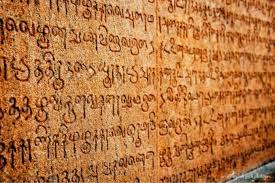
Ancient languages such as Latin, Sanskrit, and Greek are often considered historical artifacts, even though they are still “alive” today in different forms. Latin, Sanskrit, and Ancient Greek are the classical languages of Indo-Europe that were once the medium of great civilizations. Although it is no longer the primary mother tongue for millions of people, all three continue to exist through direct descent, ritual use, scientific, and revitalization efforts. Latin evolved into Romance languages, Sanskrit retained a sacred and intellectual role in India, while Modern Greece is a direct continuation of Ancient Greece with remarkable continuity for over 3,000 years. This continuity shows that languages are not only dead or living binary, but can evolve, adapt, and maintain their cultural and intellectual heritage in the modern era.
Latin is often referred to as a dead language because it has no native speakers, yet its influence is very much alive in science, law, medicine, and religion. Classical Latin evolved into Vulgar Latin which gave birth to modern Romance languages such as Italian, French, Spanish, Portuguese, and Romanian. Latin vocabulary dominates scientific terminology (e.g., homo sapiens, viruses, bacteria) and legal phrases such as habeas corpus, pro bono, and ad hoc. In the Catholic Church, Latin remains the official language of the Vatican, with a small community practicing contemporary Latin for everyday conversation. The teaching of Latin in schools and universities continues as it helps to understand the roots of the European language and train the logic of thinking. Latin heritage proves that a language can “die” as a colloquial language and yet remain the foundation of modern civilization
. Sanskrit, the sacred language of Hindus and Buddhists, is experiencing an exciting resurgence in modern India. As the classical language used in the Vedas, Upanishads, and the Mahabharata-Ramayana epics, Sanskrit was once the lingua franca of South Asian intellectuals. Although the number of native speakers is very small, revitalization movements such as Samskrita Bharati have trained millions of people to speak Sanskrit conversationally. Some states in India such as Uttarakhand make it a second official language. Thousands of words in Indonesian, Old Javanese, and modern Indian languages are derived from Sanskrit (e.g., teacher, king, private, human, dharma). Its use in religious rituals, astrology, yoga, and classical literature keeps it alive as a spiritual and cultural language. The revitalization of Sanskrit reflects the efforts to maintain the identity of Indian civilization in the midst of globalization.
Modern Greek is the most dramatic example of the continuity of ancient languages. In contrast to Latin which evolved into new languages or more static Sanskrit in classical form, Modern Greek (Dimotiki) is a direct continuation of Ancient Greece through Koine and Byzantine Greece. The alphabet, core vocabulary, and many grammatical structures are still recognizable despite phonological changes and simplifications. Modern Greek speakers can read ancient texts with practice, especially Koine texts such as the New Testament. It continues to be spoken by more than 13 million people in Greece and Cyprus as a national language of daily life, media, education, and literature. This continuity makes Greek one of the languages with the longest written history in the world, connecting Homer, Plato, and Aristotle with contemporary society.
Overall, Latin, Sanskrit, and Modern Greek prove that ancient languages can survive through different mechanisms: evolution (Latin), sacred revitalization and education (Sanskrit), and historical continuity (Greek). These three not only preserve ancient knowledge, but also continue to shape ways of thinking, cultural identity, and the advancement of human science. In today’s digital age, documentation, learning applications, and preservation movements are increasingly ensuring that this linguistic heritage will not become extinct. Understanding the sustainability of these languages reminds us that language is a bridge between generations and between civilizations, whose richness must be preserved for a more rooted and wise future of human civilization.
#latin
#sanskrit
#greek
#ikahentihu

