
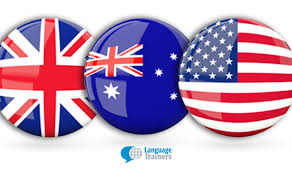
English has become the most influential language in the modern world, spoken by more than 1.5 billion people as a first and second language. Although it originated from a common root in medieval England, it evolved into a variety of rich and different variants according to the history, culture, and geographical environment of each country. The three main variants that are most known and most widely used are British English, American English, and Australian English. Not only do they differ in pronunciation, spelling, and vocabulary, but they also reflect a strong national identity. These differences are often both a challenge and a beauty for English learners around the world, as they force us to understand the cultural context behind each word. From Hollywood movies to BBC news, from Aussie songs to official UN documents, these three variants compete with each other and complement each other on the global stage.
British English, as the parent of all variants of English, was born and developed in England since the 5th century AD. This variant is known for its more “classic” spellings such as “colour”, “centre”, and “organise”, as well as distinctive vocabulary such as “lift” for elevators, “boot” for car trunk, and “holiday” for holidays. The pronunciation tends to be more formal and rich in regional accents such as Received Pronunciation (RP) which is often called “Queen’s English”. British English is heavily influenced by royal history and classic literature from Shakespeare to Jane Austen, so many of its phrases and idioms still feel archaic but elegant. Internationally, British English has become the official standard in many Commonwealth countries, including in European and Asian schools. However, these variants also continue to adapt to the digital age, where new words such as “Brexit” or “NHS” (National Health Service) are born from the UK’s own political and social context. Its strength lies in its cultural prestige and strict grammatical accuracy.
American English emerged as the most dominant variant globally thanks to the economic, entertainment, and technological power of the United States. Since colonization in the early 17th century, English in the Americas began to diverge with spellings simplified by Noah Webster, such as “color”, “center”, and “organize”. The vocabulary is more direct and practical: “elevator” is not “elevator,” “truck” is not “lorry,” and “apartment” is not “flat.” American English pronunciation tends to be flatter and faster, with regional accents ranging from Southern drawl to New York twang. This variant dominates the world’s media through Hollywood, Netflix, and technology companies such as Google and Apple. As a result, millions of students around the world are learning American English because it is considered more “modern” and easy to use in international business. However, American English also absorbed influences from Spanish, French, and Native American immigrants, resulting in words such as “okay”, “cookie”, and “baseball” that are now a universal part of English.Australian English, although often considered a “small” variant, has a unique appeal that is no less interesting. Rooted in the British English brought by convicts and settlers in the late 18th century, this variant thrived in a harsh and isolated continental environment. The spelling follows British such as “colour” and “centre”, but the vocabulary is full of typical slang such as “arvo” for afternoon, “barbie” for barbecue, “sheila” for women, and “fair dinkum” which means “really”. Australian English pronunciation is known for its “rising intonation” which makes sentences sound like questions, as well as influences from Aboriginal languages such as “kangaroo”, “koala”, and “boomerang”. In the midst of an egalitarian and relaxed culture, Australian English reflects the Australian spirit of being friendly, humorous and close to nature. Although the number of speakers is only around 25 million people, this variant is growing in popularity through films such as Crocodile Dundee, AC/DC music, to YouTube and TikTok content from Australian creators. Understanding these three English variants is not only about memorizing vocabulary, but about respecting the diversity of cultures that live in them. In the era of globalization, a student or professional must be flexible—able to switch from British English when reading a British scientific journal, to American English when a business presentation, and Australian English when interacting with a friend from Down Under. This difference actually enriches English as an international language, as each variant brings new colors, history, and creativity. In the future, with the advancement of AI and social media, these three variants will continue to evolve and influence each other, creating an increasingly inclusive English language. For anyone who wants to master this language, the key is to be open to those differences. That way, English is no longer just a means of communication, but a window into a world full of colors and stories.
#british
#american
#australian
#aussy
#ikahentihu