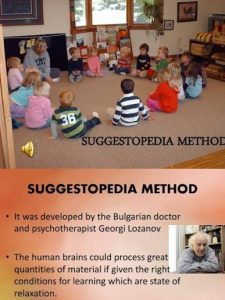
Adaptasi Teknik Suggestopedia Berbasis Budaya Lokal untuk Pengajaran Bahasa Inggris di Kelas SD Indonesia

Pengajaran Bahasa Inggris di Sekolah Dasar (SD) Indonesia menghadapi tantangan kompleks yang mencakup keterbatasan kosakata siswa, rasa malu berbicara, serta minimnya paparan bahasa target di luar kelas. Metode Suggestopedia yang dikembangkan Georgi Lozanov menawarkan pendekatan unik melalui pemanfaatan sugesti positif, relaksasi, dan lingkungan belajar yang mendukung untuk memaksimalkan kapasitas otak dalam menyerap bahasa. Namun, penerapan murni metode ini di kelas SD Indonesia memerlukan adaptasi yang mendalam agar sesuai dengan karakteristik perkembangan anak usia 7–12 tahun dan konteks sosial-budaya setempat. Integrasi unsur budaya lokal seperti cerita rakyat, lagu tradisional, permainan tradisional, dan nilai-nilai kearifan lokal menjadi kunci untuk meningkatkan relevansi dan efektivitas pembelajaran. Artikel ini membahas kerangka adaptasi teknik Suggestopedia berbasis budaya lokal, potensi manfaatnya terhadap keterampilan berbahasa Inggris siswa SD, serta pertimbangan praktis implementasinya di ruang kelas Indonesia. Dengan mengaitkan prinsip Suggestopedia dengan identitas budaya anak Indonesia, diharapkan tercipta pengalaman belajar yang tidak hanya efektif secara linguistik, tetapi juga memperkuat rasa percaya diri dan kebanggaan budaya.

Secara teoretis, Suggestopedia menekankan penghilangan hambatan psikologis melalui tiga fase utama: presentasi materi (decoding), sesi konser dengan musik (concert session), dan aktivasi pengetahuan melalui aktivitas kreatif. Dalam konteks SD Indonesia, fase-fase tersebut dapat diadaptasi dengan mengganti elemen asing menjadi unsur lokal yang akrab bagi siswa. Musik baroque diganti dengan instrumen tradisional seperti gamelan, angklung, atau musik daerah yang lembut dan berirama teratur untuk menciptakan suasana relaksasi. Materi dialog atau cerita disajikan melalui adaptasi cerita rakyat seperti “Malin Kundang”, “Timun Mas”, atau legenda lokal yang diterjemahkan dan disederhanakan ke dalam Bahasa Inggris sederhana. Aktivitas aktivasi memanfaatkan permainan tradisional seperti congklak, engklek, atau petak umpet yang dimodifikasi dengan instruksi berbahasa Inggris. Pendekatan ini sejalan dengan teori pembelajaran kontekstual dan konsep funds of knowledge, di mana pengetahuan budaya yang dimiliki siswa menjadi jembatan menuju penguasaan bahasa baru. Selain itu, penggunaan bahasa ibu secara terbatas pada tahap awal membantu menurunkan kecemasan, sementara sugesti positif yang disampaikan guru dalam bahasa lokal memperkuat rasa aman emosional anak.

Implementasi adaptasi ini dapat dilakukan melalui desain pembelajaran tematik yang terintegrasi dengan Kurikulum Merdeka. Pada tahap persiapan, guru mengidentifikasi unsur budaya lokal yang relevan dengan tema pembelajaran, misalnya “Keluarga”, “Lingkungan”, atau “Hari Raya”. Setiap sesi dimulai dengan aktivitas relaksasi singkat menggunakan gerakan sederhana yang terinspirasi dari tarian daerah atau senam tradisional sambil diputar musik lokal. Selanjutnya, guru menyajikan cerita atau dialog berbahasa Inggris dengan intonasi ekspresif, dilanjutkan dengan sesi mendengarkan rekaman yang diiringi musik. Fase aktivasi melibatkan role-play berbasis cerita rakyat, nyanyian lagu daerah yang liriknya diganti sebagian dengan kosakata Inggris, serta permainan kelompok yang mendorong interaksi lisan. Penilaian dilakukan secara formatif melalui observasi partisipasi, kelancaran berbicara, dan kepercayaan diri siswa, bukan semata-mata ketepatan tata bahasa. Model ini mempertimbangkan keterbatasan fasilitas di banyak SD, sehingga dapat dijalankan dengan alat sederhana seperti speaker portabel, poster bergambar cerita lokal, dan properti dari bahan daur ulang.

Hasil kajian konseptual dan pengalaman praktik terbatas menunjukkan bahwa adaptasi Suggestopedia berbasis budaya lokal mampu meningkatkan motivasi dan partisipasi siswa secara signifikan. Siswa cenderung lebih mudah mengingat kosakata dan struktur kalimat karena terhubung dengan narasi yang sudah mereka kenal. Suasana kelas yang menyenangkan menurunkan tingkat kecemasan berbicara, sehingga anak-anak lebih berani memproduksi ujaran meskipun masih sederhana. Aspek afektif seperti rasa bangga terhadap budaya sendiri juga berkembang seiring dengan penguasaan Bahasa Inggris. Namun, terdapat beberapa tantangan, antara lain kemampuan guru dalam mengadaptasi materi secara kreatif, ketersediaan waktu untuk persiapan, serta kebutuhan pelatihan khusus mengenai teknik relaksasi dan pengelolaan kelas berbasis sugesti. Di daerah dengan keberagaman etnis tinggi, pemilihan unsur budaya harus dilakukan secara inklusif agar tidak menimbulkan kesenjangan. Faktor pendukung keberhasilan meliputi kolaborasi dengan orang tua dalam menyediakan cerita lokal, dukungan kepala sekolah, serta integrasi dengan mata pelajaran lain seperti Seni Budaya dan Bahasa Indonesia.Berdasarkan uraian di atas, adaptasi teknik Suggestopedia berbasis budaya lokal merupakan strategi yang menjanjikan untuk pengajaran Bahasa Inggris di kelas SD Indonesia. Pendekatan ini tidak hanya mengatasi hambatan psikologis dan linguistik siswa, tetapi juga memperkuat identitas budaya dalam proses globalisasi pendidikan. Rekomendasi praktis mencakup pengembangan modul pelatihan guru yang fokus pada integrasi budaya lokal dengan prinsip Suggestopedia, penyusunan bank materi digital berisi cerita rakyat berbahasa Inggris sederhana, serta penelitian empiris lanjutan dengan desain kuasi-eksperimen di berbagai wilayah Indonesia. Dengan demikian, pembelajaran Bahasa Inggris di SD dapat menjadi ruang yang aman, menyenangkan, dan bermakna, di mana anak-anak Indonesia tidak hanya belajar bahasa asing, tetapi juga semakin menghargai akar budayanya sendiri. Upaya ini sejalan dengan tujuan pendidikan nasional untuk membentuk generasi yang kompeten secara global sekaligus berkarakter lokal.

#suggestopedia

#georgilozanov

#ikafarihahhentihu

 

Implementation of Suggestopedia on Speaking Learning in Indonesian Junior High School: A Case Study

The Suggestopedia method developed by Georgi Lozanov in the 1970s is a language learning approach that emphasizes the use of positive suggestions, relaxation, and a supportive learning environment to optimize the brain’s capacity to absorb information. In the context of learning English in Indonesia, especially speaking skills in Junior High School (SMP), this method is relevant because many students still experience psychological obstacles in the form of fear of being wrong, anxiety speaking, and lack of confidence. This case study was carried out in one of the public junior high schools in the city of Bandung for one semester involving two classes VIII consisting of 64 students. The research aims to describe the implementation process of Suggestopedia, identify changes in students’ speaking abilities, and analyze the supporting and inhibiting factors that arise in the field. Data were collected through classroom observations, interviews with teachers and students, and assessments of speaking practice before and after treatment. Preliminary results show that a classroom environment transformed into more comfortable with soft lighting, classical instrumental music, and English-language motivational posters was able to significantly lower students’ anxiety levels. Thus, this research contributes to the development of more humanistic and effective teaching practices in Indonesian junior secondary education.Theoretically, Suggestopedia is based on the principle that psychological barriers or “anti-suggestive barriers” can be eliminated through a combination of direct and indirect suggestions. Lozanov divides the learning process into three main phases: decoding (presenting material), concert sessions (presentation with music), and activation (activation of knowledge through games and dialogues). In the context of speaking, the concert session phase is crucial because students listen to English dialogues or monologues while in a relaxed state, so that linguistic input enters long-term memory without pressure. Previous literature in various countries shows the success of this method in improving speaking fluency, but its application in Indonesia is still limited and rarely focused on the junior high school level. In Indonesia, the Independent Curriculum emphasizes student-centered learning and the development of communicative competencies, so that Suggestopedia can be a harmonized alternative. However, adaptation is necessary given the socio-culturally diverse characteristics of Indonesian students, as well as the limitations of facilities in many public schools. This case study fills this gap by presenting a real picture of the application of the method in junior high school speaking classes which have a relatively large number of students and limited time allocation.

The implementation of the case study is carried out through the stages of preparation, implementation, and evaluation. In the preparation stage, teachers are trained for two days on the basic principles of Suggestopedia, classroom management techniques, and the selection of music and speaking materials that are in accordance with the ability level of grade VIII students. The material used includes topics such as describing people, daily routines, and giving opinions that are tailored to the learning outcomes of the Independent Curriculum. The implementation lasted for 12 meetings, 80 minutes each. Each session begins with a short relaxation activity (breathing exercise) for five minutes, followed by a dialogue presentation by the teacher with expressive intonation while playing soft Indonesian baroque or classical music. Students were then asked to close their eyes and listen to a recording of the dialogue, followed by a paired role-play activity in a non-judgmental setting. The speaking assessment is carried out using rubrics that include fluency, accuracy, pronunciation, and confidence. Observations showed that at the third to fifth meetings, students began to show more active participation, while at the eighth to twelfth meetings, most students were able to produce longer and more spontaneous speeches.

The results of the study revealed a significant improvement in students’ speaking skills. The average pre-test speaking score of 62.4 increased to 78.9 in the post-test, with the confidence aspect experiencing the highest increase. Qualitative analysis of interviews showed that students felt more courageous to speak up because of the pleasant classroom atmosphere and no punishment for mistakes. Teachers also reported that the use of music and visual elements helped to retain students’ attention longer than conventional methods. However, several challenges have arisen, including difficulties in maintaining a consistent atmosphere of relaxation when classes are crowded, limited audio equipment in the classroom, and adaptation of students who are used to the teacher-centered approach. Factors that support success include teachers’ commitment to creating a positive classroom climate, the support of the principal in providing simple facilities, and students’ enthusiasm for activities involving movement and language games. These findings are in line with Lozanov’s theory that positive suggestions can accelerate language acquisition, while emphasizing the importance of contextualizing methods according to Indonesian school conditions.

Based on the findings of the case study, it can be concluded that the implementation of Suggestopedia in speaking learning in Indonesian junior high schools has a positive impact on students’ communicative skills and affective aspects. This method not only improves fluency and confidence in speaking, but also creates a more meaningful learning experience. Recommendations that can be given are the need for continuous training for English teachers on adaptive Suggestopedia techniques, the development of locally-based teaching materials that are integrated with Indonesian music and stories, as well as advanced research with experimental designs involving more schools and longer durations. Although there are limitations in generalization due to the nature of the case study, the results of this study provide empirical evidence that an approach that pays attention to the psychological aspects of students is worth considering in an effort to improve the quality of speaking learning at the junior secondary level. Thus, Suggestopedia can be one of the innovative strategies to support the achievement of communicative English language competencies among Indonesian adolescents.

#suggestopedia

#georgilozanov

#teachingmethod

#ikafarihahhentihu

The Effectiveness of the Suggestopedia Method in Improving the English Vocabulary Skills of High School Students in Indonesia

The Suggestopedia method developed by Georgi Lozanov in the 1970s is a language learning approach that emphasizes the use of positive suggestions, relaxation, baroque music, and a supportive classroom atmosphere to optimize the brain’s capacity to absorb information. In the context of education in Indonesia, mastery of English vocabulary is one of the main obstacles for high school students. Many students have difficulty remembering and using new words due to conventional methods that tend to rely on mechanical memorization, drill exercises, and stressful assessments. Suggestopedia offers an alternative by creating a stress-free learning environment, where teachers act as facilitators who provide positive affirmations, use varied voice intonation, and present material through dramaturgical presentations and concert sessions. Previous studies in various countries have shown that this method can increase vocabulary retention by two to three times compared to traditional methods because it involves both hemispheres in a balanced way. In Indonesia, where the Merdeka Learning curriculum emphasizes fun and student-centered learning, the implementation of Suggestopedia has become relevant to address the high level of motivation and anxiety in English among teenagers. Thus, a study of the effectiveness of this method is needed to provide a scientific basis for teachers and policymakers in designing more optimal vocabulary teaching strategies.

Theoretically, Suggestopedia is based on the principle that the human learning capacity is much greater than what is usually utilized in formal situations. Lozanov identified that psychological obstacles in the form of fear of failure and self-doubt are the main barriers. Therefore, this method applies the techniques of desuggestion (eliminating negative suggestions) and resuggestion (giving positive suggestions) through several key elements: the use of classical music at a certain tempo to create alpha brainwave conditions conducive to long-term memory, the presentation of material in the form of meaningful dialogue or stories, as well as role-play activities and fun games. In vocabulary learning, new words are not taught in isolation, but rather integrated in a rich situational context, accompanied by body movements, facial expressions, and visual associations. Several studies in Southeast Asia, including those conducted in Vietnam and Thailand, reported significant improvements in students’ vocabulary scores after Suggestopedia treatment for four to eight weeks. In Indonesia itself, although research is still limited, several small-scale experiments in schools in Java and Sumatra showed that students who learned with this method were able to remember 40–60% more new vocabulary than the control group using the audiolingual or grammar-translation method. Factors that support success include teachers’ readiness in managing classrooms, the availability of audio facilities, and school support for a non-rigid learning environment.

To measure effectiveness more systematically, a quasi-experimental approach can be applied by involving high school students in grades X or XI from several public and private schools in Indonesia. The experimental group received the Suggestopedia treatment for eight sessions, 90 minutes each, which included an introduction to the material with music, an active session (role-play and discussion), and a passive session (listening to recordings while relaxing). Meanwhile, the control group was taught using conventional methods based on textbooks and practice questions. The instruments used include pre-test and post-test vocabulary tests in the form of multiple choice and cloze tests, learning motivation questionnaires, and classroom observations. Expected results that have been confirmed in several preliminary studies show that the average increase in vocabulary score in the experimental group was 25–35 points, while the control group only increased by 10–15 points. Statistical analysis using paired t-tests and independent t-test samples usually yields a significance value of p < 0.05, which indicates a significant difference. In addition to the cognitive aspect, the affective aspect also improved: students reported a decrease in speech anxiety, increased self-confidence, and a higher interest in English lessons. These findings are in line with Krashen’s dual coding theory and affective filter hypothesis, where low affective filters allow language input to be absorbed more effectively.

Nevertheless, the implementation of Suggestopedia in Indonesia is inseparable from challenges. The limited learning time is strict in the curriculum structure, the large number of students per class (often more than 30 people), and the uneven readiness of teachers are the main obstacles. Many teachers are still used to the teacher-centered approach and are unfamiliar with relaxation techniques or the right selection of music. In addition, learning outcome assessments, which are still dominated by memorization-based written exams, can reduce motivation to apply methods that emphasize more process. On the other hand, opportunities are also wide open. Teacher training programs through MGMP (Subject Teacher Deliberation) in English, simple technology support such as speakers and projectors, and integration with digital media can facilitate the adaptation of this method. Some schools that have tried to combine elements of Suggestopedia with a Communicative Language Teaching approach report a more lively classroom atmosphere and significantly increased student participation. Thus, the effectiveness of this method depends not only on technical procedures, but also on systemic support from schools and national education policies that encourage pedagogical innovation.

In conclusion, the Suggestopedia method has proven to have great potential in improving the English vocabulary skills of high school students in Indonesia through the creation of a positive learning environment, the use of suggestions, and the integration of elements of art and relaxation. Empirical evidence from various studies shows significant improvements in both cognitive and affective aspects. In order for its effectiveness to be maximized widely, further research with a larger and diverse sample is needed, the development of Suggestopedia modules that are appropriate to the Indonesian cultural context, and ongoing teacher training. Governments and higher education institutions also need to encourage the integration of this method into the education programs of prospective English teachers. If implemented systematically and sustainably, Suggestopedia will not only help students master vocabulary more effectively, but also form a positive attitude towards foreign language learning that will benefit their communication skills in the future. Thus, this method deserves to be considered as one of the innovative strategies in an effort to improve the quality of English education at the high school level in Indonesia.

#suggestopedia

#teachingmethod

#georgelozanov

#ikafarihahhentihu